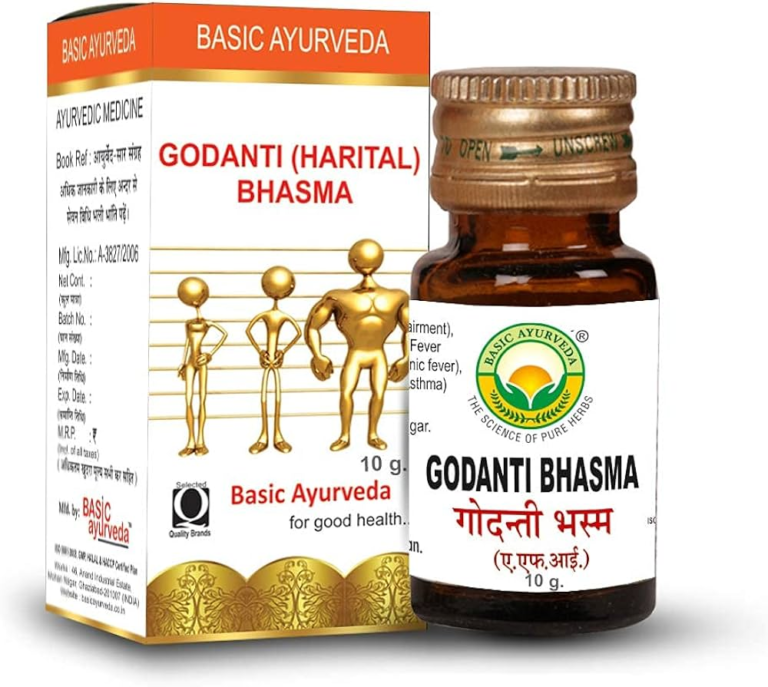
Godanti Bhasma is a conventional Ayurvedic mineral formulation that is mainly prepared from processed and purified gypsum (calcium sulphate). The Ayurvedic medicine has traditionally been applied to fever, headaches, digestive disorders, respiratory symptoms and bone-related problems.
It is important to point out that in 2026, the following needs to be considered: many health advantages of Godanti Bhasma have their origin in traditional Ayurvedic medicine and not in modern scientific proof. Hence, its application should be done only with professional help, and it cannot be a replacement for scientific treatment methods.
1. Traditionally Applied to Fever

The use of Godanti Bhasma to combat fever is one of its most well-known traditional uses.
The Ayurvedic medicine is known to possess cooling characteristics. Nevertheless, fever is a symptom of infections and illnesses and therefore requires proper examination by professionals.
2. Traditionally Used for Headaches
Godanti Bhasma has traditionally been used in Ayurvedic medicines for the treatment of various kinds of headaches, which may be related to fever.
There is not much modern evidence available to show that Godanti Bhasma can effectively prevent migraines or chronic headaches. In case of frequent headaches or very severe headaches, medical examination is required.
3. It Could Provide Calcium
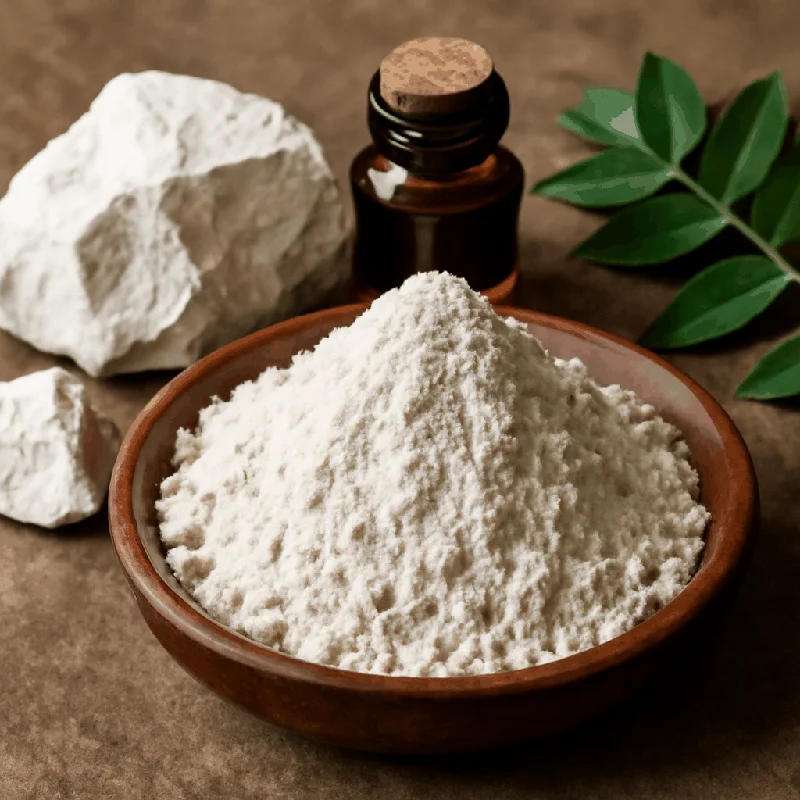
Since Godanti Bhasma is made from gypsum, it contains calcium substances.
It is due to this that it has been traditionally linked to healthy bones and bone repair. However, it is not true that its calcium content is similar to that of conventional calcium supplements.
Calcium, vitamin D, proteins and physical exercise are all important for good bones.
4. Has Been Used for Cough and Bronchitis
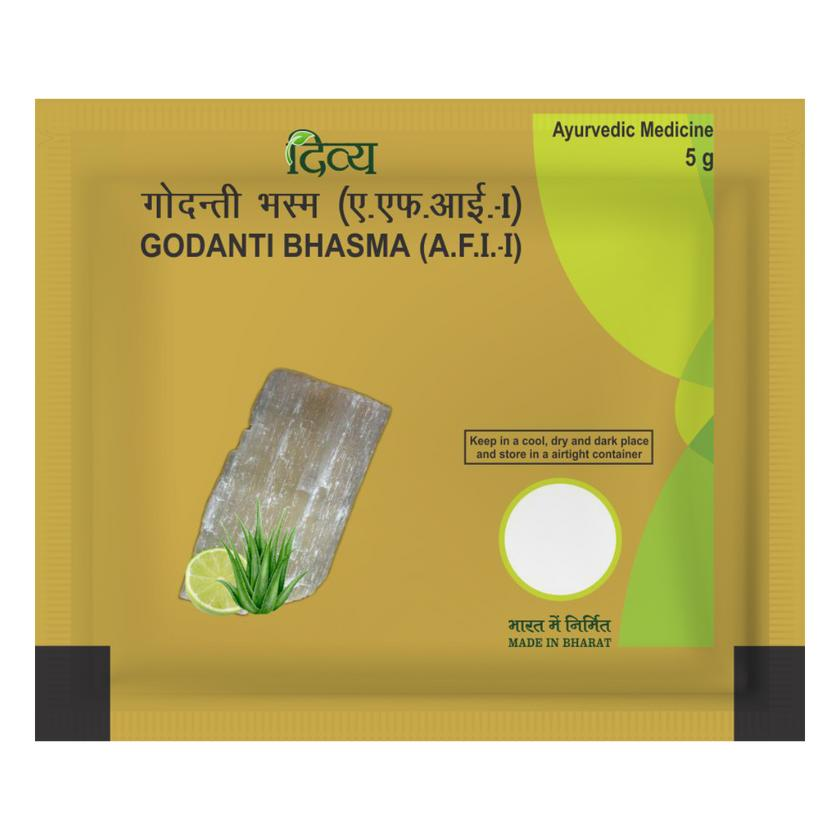
According to Ayurveda, Godanti Bhasma has been traditionally used in medicines meant for cough, bronchitis and other respiratory disorders.
No evidence exists to suggest that it can reduce airway inflammation or is useful for treating asthma.
Individuals who have asthma or suffer from breathing problems need to continue using their inhalers and other medications instead of switching to Ayurvedic medicines.
5. May Help With Digestive Discomfort
Godanti Bhasma is commonly taken for digestive ailments like acidity, indigestion, and abdominal pain.
The reasons given by Ayurveda include the regulation of digestion and the reduction of heat. There is still not enough scientific research to confirm this effect on the human body.
When experiencing persistent acidity or digestive problems, it is advised to visit a doctor to check for disorders like reflux disease or ulcers.
6. Used for Joint Health
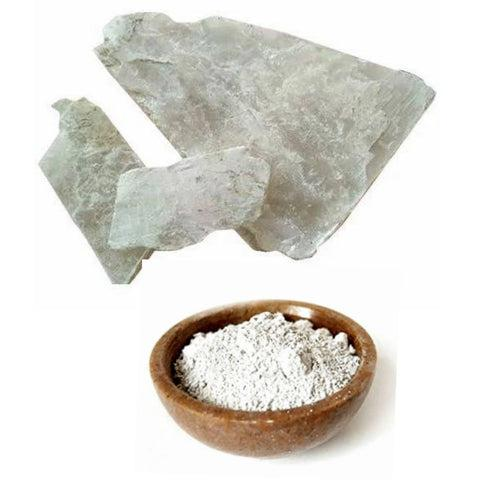
Godanti Bhasma can be found in Ayurvedic medicines used to alleviate joint pain.
While traditional medicine believes the preparation has anti-inflammatory effects, there is not enough scientific proof of it being effective against arthritis and other inflammatory joint diseases.
It should not replace prescribed arthritis medication and physiotherapy treatment.
7. Potential Antioxidant and Anti-Inflammatory Interest
Certain traditional and experimental studies on Ayurvedic mineral preparations have studied their potential anti-inflammatory and antioxidant properties.
This should be viewed critically, as laboratory data cannot always serve as the basis for proven health benefits in humans.
Further studies in the form of more strictly controlled clinical trials involving Godanti Bhasma are needed.
8. Traditional Usage in the Case of Acidity and Body Heat
The preparation described in Ayurveda is cooling, which is why it has traditionally been used in cases of excess heat, burning sensation and acidity.
These terms are traditionally used in Ayurvedic medicine. Assertions that the preparation controls the body’s temperature and heat stroke must not be understood as medical facts.
Heat stroke is a serious health condition that requires urgent care.
9. Traditional Use during the Recovery Period
As mentioned above, Godanti Bhasma contains several minerals, so it has sometimes been included in traditional Ayurvedic therapies aimed at strengthening and recovery from illnesses.
However, recovery is associated with sufficient intake of calories, protein, vitamins, minerals, fluids, sleep and proper treatment of the illness.
There is no scientific evidence supporting Godanti Bhasma’s immune-boosting and recovery qualities.
10. Role in Traditional Ayurvedic Practice

Probably one of the most obvious roles of Godanti Bhasma is its long presence in Ayurvedic medicine.
Instead of being taken in any quantities as a usual nutritional supplement, Godanti Bhasma is usually prescribed in exact quantities along with other Ayurvedic preparations.
That is also the reason why professional guidance is required. A medicine should never be considered a usual food product.
Is Godanti Bhasma Safe?
The safety of the product mostly depends on the manufacturing quality, purity, composition and dosing of the mineral. Contaminated Godanti Bhasma can cause negative side effects.
Potential side effects may include digestive issues, constipation or other symptoms. The safety of regular use is yet to be proven by clinical research.
Buying an unproven preparation and taking it on your own for several months is not really recommended.
Who Should Be Extra Careful?

It is advised to seek professional consultation in case you are pregnant or breastfeeding, or if you have a chronic disease, especially problems with the kidneys or liver.
Moreover, it is highly recommended to consult your doctor if you take other prescription drugs.
My Personal Favourite
For me, what is most significant about Godanti Bhasma is differentiating between traditional usage and clinical proof.
On one hand, traditional Ayurveda can provide reasons why a certain preparation was used before, whereas on the other hand, clinical research can show whether this effect is indeed proven and how safe this treatment is. Separating these two concepts leads to a healthier decision-making process.
Conclusion
Godanti Bhasma is traditionally used for conditions such as fever, headaches, digestive issues, breathing problems, joint problems, and bone problems. The composition of Godanti Bhasma, which contains gypsum, leads to its connection with calcium.
But many of the benefits claimed for it do not have much scientific evidence. Therefore, in 2026, Godanti Bhasma should be considered a traditional Ayurvedic medicine and not a cure.
About the Author