
Very Large Scale Integration, also known as VLSI, is a very important element of what we see in modern electronics. It is the design and development of integrated circuits that put millions to billions of transistors onto a single chip. In the fields of smartphones and computers, electric vehicles, communication systems, and artificial intelligence, VLSI is key in making that technology smaller, faster, and more efficient.
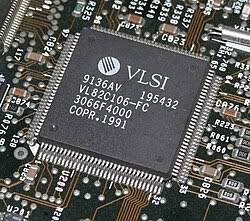
What Does VLSI Mean?
VLSI is a field that puts electronic components like transistors, logic gates, and memory elements into a small-scale integrated circuit. In terms of the development process, it goes through a number of stages, which include circuit design, simulation, verification, physical design, testing, and manufacturing. We see that engineers use hardware description languages and Electronic Design Automation (EDA) tools to take circuit ideas from concept to practical chip designs.
Importance of VLSI in 2026
In 2026, VLSI has seen a growth in its importance, which is behind the demand for very powerful computing and connection tools. Out of this has come the growth of artificial intelligence, data centers, 5G and 6G communication, Internet of Things devices, autonomous systems, and electric mobility, which all in turn have a great deal of need for ever better-performing semiconductor chips. As these applications require doing more with less power, chip design has become a very complex affair.
Advanced package and chiplet-based designs are also growing to be as important as traditional VLSI. In modern semiconductor development, which is very much a design of the system as a whole, a play of parts including design, manufacture, packaging, testing, and system integration is required instead of putting all eggs in the chip design basket.
VLSI Career Opportunities
VLSI provides many career options for electronics and related engineering graduates. In fields like digital design, analog design, verification, physical design, design-for-test, semiconductor manufacturing, and embedded systems, professionals may work. This includes knowledge of Verilog or SystemVerilog, digital electronics, computer architecture, and EDA tools, which students may use to build a foundation for these roles.
VLSI and India’s Semiconductor Growth
India is seeing an increase in focus on semiconductor design, manufacturing, and talent development in 2026. The India Semiconductor Mission 2.0 includes chip design, research and development, semiconductor equipment, fabrication, advanced packaging, and workforce development. Also, India has a large role in global semiconductor design and R&D.
Conclusion
VLSI is at the base of today’s digital world. By 2026, we see its scope expand beyond traditional chip design to include AI hardware, advanced packaging, specialized processors, and full semiconductor systems. As tech continues to evolve, VLSI is set to play a key role in innovation and in engineering jobs.
About the Author