
Students are highly encouraged to study artificial intelligence (AI), one of the most popular courses in technology. AI programs will include fundamental knowledge as well as advanced technology such as generative AI and deep learning. There will be some differences in the syllabus depending on the educational institutions offering the courses of study.
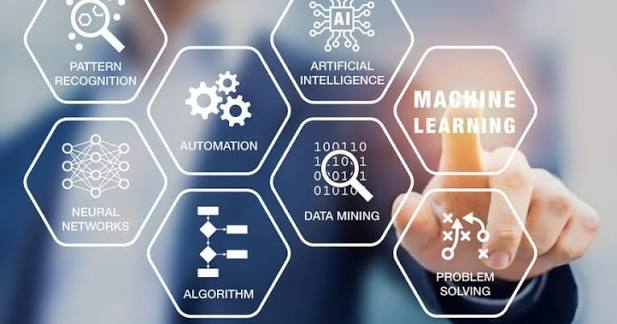
Some essential subjects in AI studies
The general curriculum of AI education is composed of subjects like programming, mathematics, and electronics. Python is mentioned in the syllabus as one of the most powerful and practical programming languages in AI and machine learning. Students will also study such crucial subjects as probability and statistics, linear algebra, and optimization influential in the applications of mathematics in AI and its techniques.
Machine learning is one of the major topics covered in the study. We discuss supervised and unsupervised learning and reinforcement learning, including such algorithms as linear regression, classification, decision trees, and clustering. Data preprocessing, model training, and performance assessment are also covered in the course.
Deep learning, NLP, and computer vision
Once our students learn the basics of machine learning, they will proceed with learning deep learning. In this, we cover artificial neural networks, backpropagation, convolutional neural networks, and recurrent neural networks. Also, students will do practical work with major AI platforms and tools.
Natural Language Processing and Computer Vision are also key areas. In NLP, we see the focus on machines that put to use human language, and in computer vision we see the analysis and interpretation of images and video. These fields include text analysis, image classification, and many other real-world applications.
Generative AI and Large Language Models
Generative AI is a key component in what we teach in modern AI. We introduce in advanced courses to students transformers, embeddings, Large Language Models (LLMs), prompt engineering, and other such technologies. Also, we look at how these techs are used in chatbots, content generation, and automation.
Ethics and Practical Learning
AI today is seeing an increase in the number of courses related to ethical and socially conscious practices at the design and deployment stage. In such classes, we find topics including privacy, inclusion issues, gender, etc., unbiased algorithms, transparency, and the aspired goals and ethics related to artificial intelligence’s use.
In 2026, our Artificial Intelligence course syllabus includes programming, math, machine learning, and advanced AI technologies, as well as practical projects. Also, students are to check the syllabus of their choice, which may differ by institution.
About the Author