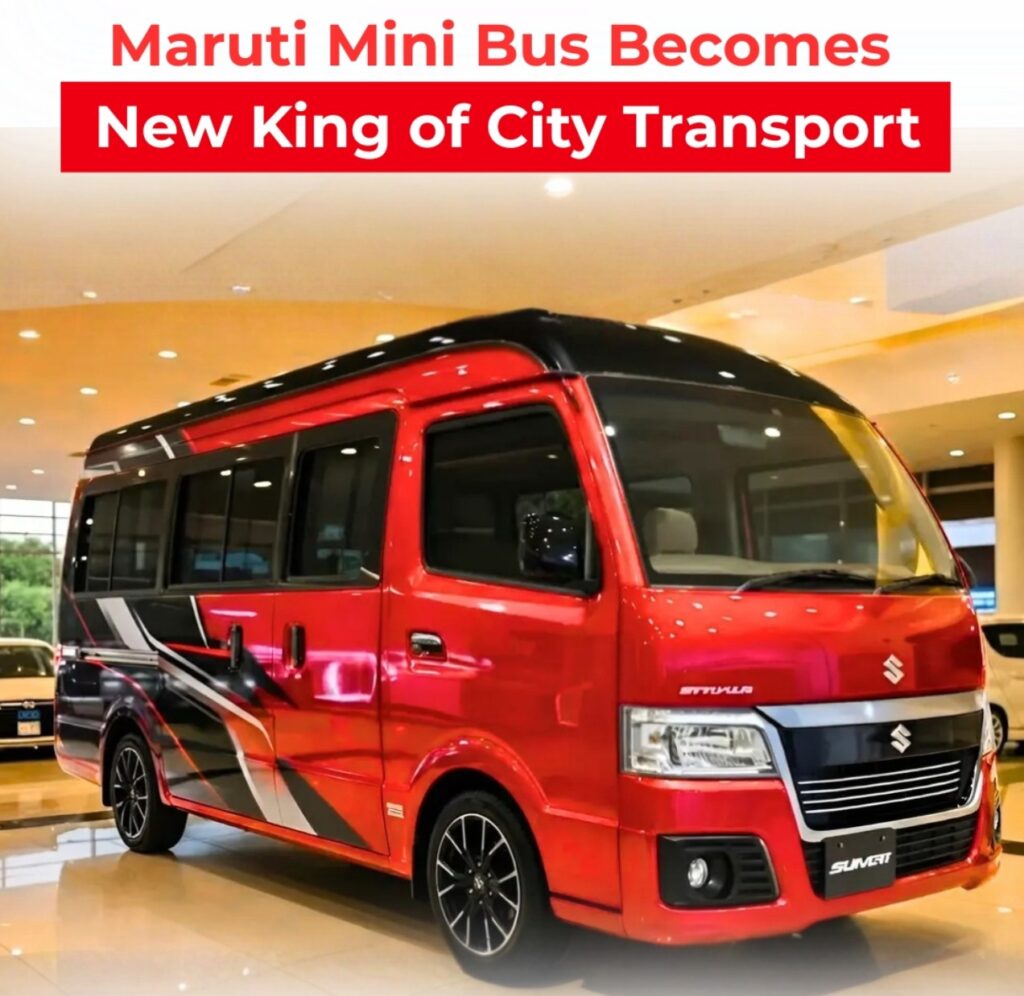
Maruti Suzuki launched a mini bus in 2026, expanding its presence in the automotive industry. The company, which has established itself in the passenger vehicle market, is now making a strong move into the commercial vehicle sector. The new mini bus is designed to meet the growing demand for cost-effective and efficient public transportation in India.
Expanding Beyond Passenger Cars
Maruti Suzuki has long been a leading automaker in India, known for its hatchbacks and small SUVs. The introduction of this mini bus allows the company to explore the commercial vehicle market. This mini bus is targeted at a range of industries including school buses, staff transport and public transport, particularly in semi-urban and rural areas.
Competitive Pricing Strategy
What makes the mini bus unique is its value for money. Starting at approximately ₹4.99 lakh (ex-showroom), it is one of the most affordable mini buses in the market. This makes it a popular choice for small-scale entrepreneurs, transportation providers, and educational institutions that need affordable and efficient transportation services.
Seating Capacity and Interior Design
The mini bus features a reliable diesel engine, complemented by a manual transmission. This vehicle is designed to provide reliable performance even in demanding situations.
Fuel type: Diesel (the plan is to have a CNG model in the near future)
- Transmission: 5-speed manual
- Fuel efficiency: 28 km per litre
The low fuel consumption translates to lower operational costs, an important consideration for commercial applications.
Engine Performance and Fuel Efficiency
The mini bus has a seating capacity of 12 to 16 passengers. The seating arrangement is designed for comfort, with adequate space and robust materials used for the seats. This allows passengers to sit comfortably for more extended trips, making it ideal for public transport.
Build Quality and Utility Features
Maruti Suzuki has prioritised reliability and maintainability in this model. The mini bus has a robust chassis and can withstand harsh road conditions and heavy usage. The parts are accessible for maintenance, contributing to lower operational costs over time.
Practical Applications
This mini bus can be used for a variety of purposes:
- School and college transportation
- Corporate employee commuting
- Tourist and shuttle services
- Local transport businesses
The bus’s smaller size offers easy manoeuvrability on busy roads, making it a good choice for urban settings.
Market Impact and Future Prospects
This mini bus is likely to boost Maruti Suzuki’s market share in the commercial vehicle segment. With its reputation for reliability and affordability, it could potentially draw in customers who are seeking alternatives to current commercial vehicle manufacturers.
Also, the potential CNG version signals a visionary approach in line with India’s efforts to promote greener and cost-effective fuel alternatives.
Conclusion
Maruti Suzuki’s 2026 mini bus is a timely addition to the commercial vehicle market. With its cost-effectiveness, efficiency and versatility, it could emerge as a popular option for commercial and institutional mobility needs.
About the Author