Arjuna is one of the most prominent characters in the Mahabharata, one of the major Sanskrit epics of Hindu tradition. Renowned for his exceptional skill in archery, courage and discipline, Arjuna is one of the five Pandava brothers and a central figure in the events leading to the Kurukshetra War.
His conversation with Krishna on the battlefield forms the setting for the Bhagavad Gita, one of the most influential philosophical texts associated with Hinduism.
Also Read: How to get an Insurance Agent License in India In 2026
Who Was Arjuna?
Arjuna was the third of the five Pandava brothers: Yudhishthira, Bhima, Arjuna, Nakula and Sahadeva.
He was the son of Kunti and is traditionally described as the son of the god Indra, making him a divine as well as heroic figure within the epic narrative.
Arjuna was known for his extraordinary concentration, military ability and commitment to mastering the art of warfare.
Arjuna as a Master Archer
Arjuna’s greatest reputation came from his skill with the bow and arrow. His principal weapon was the legendary Gandiva bow, which is described in the Mahabharata as a powerful divine weapon.
He trained under Drona, the renowned martial teacher who instructed both the Pandavas and Kauravas.
One famous episode illustrates Arjuna’s concentration. During an archery exercise involving a bird, Drona asked his students what they could see. While others described the bird and surrounding objects, Arjuna focused only on the target. The story is traditionally used to illustrate concentration and single-minded determination.
Arjuna and Krishna
Arjuna’s relationship with Krishna is one of the most important relationships in the Mahabharata.
Krishna served as Arjuna’s charioteer during the Kurukshetra War. Before the battle began, Arjuna became deeply troubled when he saw relatives, teachers and friends standing on the opposing side.
He questioned whether fighting the war was morally justified.
Krishna responded by teaching him about dharma, action, duty, the nature of the self, knowledge, devotion and liberation. This dialogue is known as the Bhagavad Gita.
Arjuna in the Bhagavad Gita
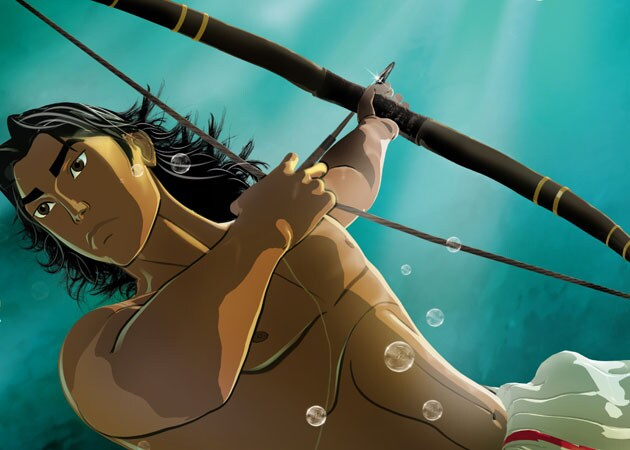
Arjuna is not merely a warrior in the Bhagavad Gita. He represents a person facing a profound moral and existential crisis.
His doubts provide the basis for Krishna’s teachings.
Among the major themes discussed are:
- Dharma – fulfilling one’s rightful duty
- Karma Yoga – disciplined action without attachment to its fruits
- Jnana – spiritual knowledge
- Bhakti – devotion to the divine
- Atman – the enduring self
- Moksha – liberation from the cycle of worldly existence
The Gita therefore presents Arjuna’s battlefield dilemma as a setting for a much broader philosophical discussion.
Arjuna’s Major Relationships
Arjuna’s life is connected with several important figures in the Mahabharata.
Krishna: His friend, guide and charioteer.
Draupadi: Arjuna was one of Draupadi’s five husbands, according to the epic tradition.
Subhadra: Arjuna married Subhadra, Krishna’s sister. Their son was Abhimanyu, an important warrior in the Kurukshetra War.
Drona: His teacher in martial arts and warfare.
Karna: One of Arjuna’s greatest rivals and ultimately his opponent on the battlefield.
Arjuna and Karna
The rivalry between Arjuna and Karna is among the most famous conflicts in the Mahabharata.
Both are portrayed as extraordinarily skilled warriors. Their rivalry becomes particularly tragic because their family relationship is revealed only later in the story: Karna is actually the son of Kunti and therefore Arjuna’s elder half-brother.
Their final confrontation during the Kurukshetra War is one of the epic’s most dramatic episodes.
Arjuna’s Character and Symbolism
Arjuna is often interpreted as a symbol of discipline, courage, concentration and the struggle to understand one’s duty.
However, his character is not portrayed as flawless. His doubts, emotional conflicts and difficult decisions make him a complex figure rather than simply an ideal warrior.
His story demonstrates that courage can involve not only physical strength but also confronting moral uncertainty and seeking wisdom.
Arjuna’s Legacy in Hindu Tradition
Arjuna remains an important cultural and religious figure in India. His story has been retold through literature, theatre, television, dance, art and popular culture.
Most importantly, his role as the listener in the Bhagavad Gita gives him a unique place in Hindu philosophical tradition. Through Arjuna’s questions, readers encounter Krishna’s teachings on life, duty, action and spiritual realization.
Also Read: Top 10 Hardest Exams In 2026
Conclusion
Arjuna is one of the most celebrated warrior heroes of the Mahabharata and a central figure in the Bhagavad Gita. His mastery of archery, relationship with Krishna, rivalry with Karna and struggle with questions of duty have made him an enduring figure in Hindu literature and thought. In 2026, his story continues to be remembered not only as an epic tale of warfare but also as a profound exploration of responsibility, morality and spiritual wisdom.
About the Author