Most people reach for a hair oil almost on instinct — it’s something passed down through families, woven into routines before we ever stop to question whether it’s actually helping. But here’s the thing: not all oiling is the same, and doing it the wrong way can sometimes do more harm than good. Understanding how oils interact with your scalp changes the way you think about this habit entirely.
What Hair Oils Actually Do (and Don’t Do)
There’s a common belief that oil feeds the hair from the outside. It doesn’t, really. Hair strands are dead structures — they can’t absorb nutrients the way skin does. What oil genuinely does is coat the hair shaft, reduce moisture loss, and protect against friction and breakage. That part is real and valuable.
Where it gets more interesting is at the scalp level. The scalp is living tissue, rich in sebaceous glands, blood vessels, and hair follicles. When an oil is applied correctly, it can help:
- Soothe inflammation or irritation on the scalp surface
- Temporarily improve blood circulation through massage
- Create a barrier that prevents excess water loss during washing
- Reduce oxidative damage on the hair fiber itself
But none of this automatically translates to hair growth unless the conditions underneath — within the follicle itself — are also healthy.
Why the Scalp Environment Matters More Than the Oil
Hair grows from follicles embedded in the scalp. Those follicles need a clean, well-circulated, low-inflammation environment to function properly. If there’s excess buildup, chronic dandruff, or scalp inflammation, even the most expensive oil won’t fix the root problem.
In fact, heavy or incorrectly applied oils can make things worse. When oil sits on the scalp for too long or isn’t washed out properly, it can mix with dead skin cells and product residue to block follicle openings. This doesn’t directly cause hair loss, but it can contribute to scalp conditions that slow the growth cycle over time.
The scalp’s natural oil — sebum — already does a decent job of lubricating and protecting. Adding more oil on top of that requires some balance. People with naturally oily scalps need to be more careful about how much they apply and how often.
Choosing the Right Ingredients
Not all oils are suited for the scalp. Some are better as hair shaft treatments; others genuinely benefit the skin underneath. A few that have shown real utility when used thoughtfully:
- Bhringraj oil has been studied in traditional medicine for its potential to extend the hair growth phase
- Castor oil, while thick, contains ricinoleic acid which may help with scalp circulation when used in small amounts
- Tea tree oil has antimicrobial properties useful for dandruff-prone scalps, though it must be diluted
- Brahmi and amla-based oils help reduce oxidative stress at the follicle level
- Lightweight oils like jojoba closely mimic sebum and absorb without heavy buildup
The formulation matters too. An oil blend designed with scalp health in mind — not just fragrance or texture — will always outperform a generic one.
How You Apply Oil Is as Important as Which Oil You Use
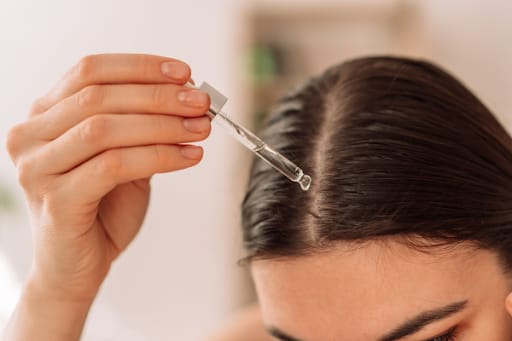
Application method is something that rarely gets discussed, but it changes outcomes significantly. Pouring oil directly on the scalp and leaving it for days isn’t optimal. A few principles worth following:
- Warm the oil slightly before application — it improves absorption and circulation
- Use fingertips, not nails, and massage gently in circular motions for 5–10 minutes
- Focus on the scalp, not just the length of your hair
- Leave it on for 30–60 minutes rather than overnight, especially if you have an oily scalp
- Use a mild, sulphate-free shampoo to rinse it properly
Consistency matters more than quantity. Two to three times a week with the right technique beats daily heavy application.
How Root Cause Thinking Changes the Approach
Hair thinning or slow growth is rarely just about what’s happening on the surface. Hormonal imbalances, nutritional deficiencies, stress, and gut health all play a role in how well your follicles function. Some approaches like traya hair oil are built around this idea — pairing topical care with an understanding of what’s driving the hair loss internally, rather than treating the scalp in isolation.
This matters because someone with DHT-driven hair loss will respond very differently to oiling than someone dealing with stress-related shedding. The oil is a tool, not a solution in itself.
Final Thoughts
Hair oiling is a genuinely useful practice when it’s done with some understanding behind it. The scalp is where the real work happens, and oils can support that environment — but they can’t replace healthy follicles, good circulation, or the right internal conditions. Think of oiling as maintenance, not treatment. When paired with an honest look at what’s actually causing your hair concerns, it becomes a much more effective part of the picture.
About the Author