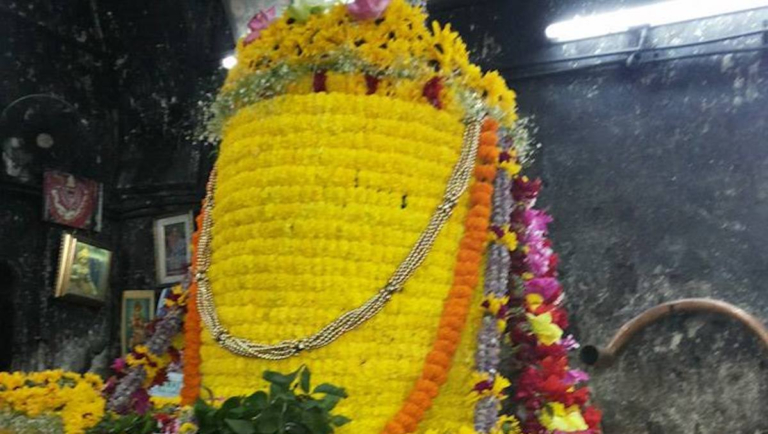
There are numerous ancient temples in India that have many interesting histories and religious and historical significance associated with them. One such temple is the Mota Mahadev Temple situated in Kolkata, West Bengal.
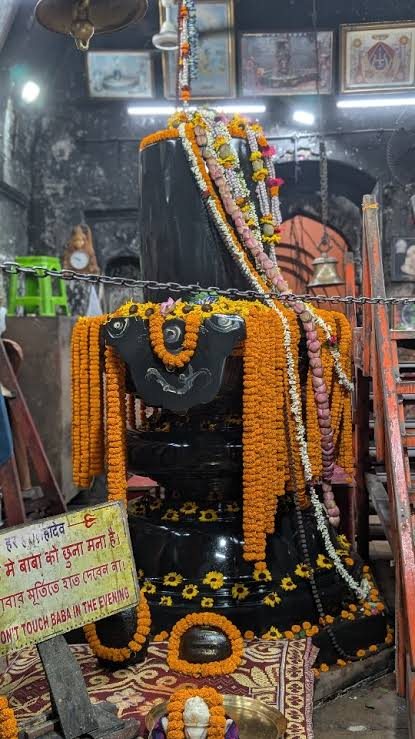
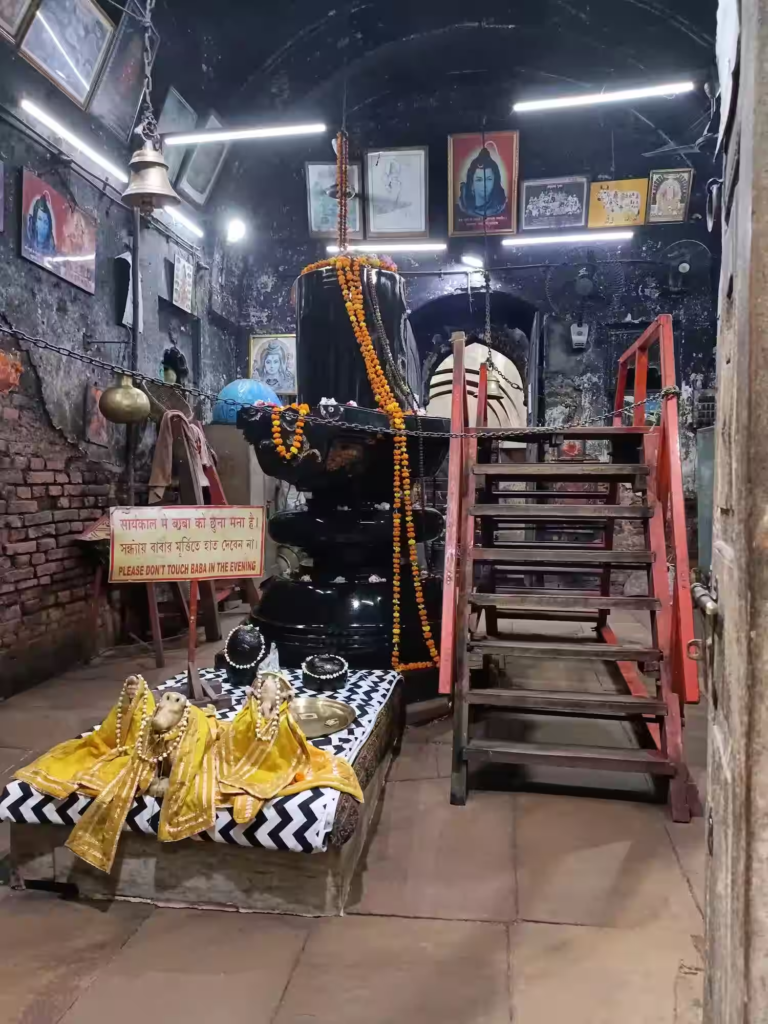
This obscure Shiva temple is renowned for the large Shivling and mysterious iron chains hanging from it. According to local folklore, the chains have been put around the Shivling so that Lord Shiva does not leave the temple.
Even in 2026, the folklore of Mota Mahadev Temple remains one of the most intriguing ones for devotees, history buffs, and people interested in the religious heritage of Kolkata.
Where Is Mota Mahadev Temple Situated?
The Mota Mahadev Temple, or Durgeshwar Shiva Temple, is situated at 16 Mohammed Ramzan Lane in Nimtala, Kolkata.
It is located in the old neighbourhoods of Kolkata, which is characterized by its narrow lanes and old buildings that narrate the past history of the city.
Although not as popular as other temples dedicated to Lord Shiva, Mota Mahadev is an important temple for the local devotees.
Its traditional architectural style, huge Shivling and fascinating legends make it an important religious landmark.
History of Mota Mahadev Temple
The history of Mota Mahadev Temple begins around the year 1794, which makes it over two centuries old.
This temple is related to Rasiklal Dutta and Jaharlal Dutta, who belong to the famous Dutta family of Kolkata.
There are references to Madanmohan Dutt of colonial Calcutta as well in the historical records of the temple.
The gigantic Shivling is said to have been sculpted by Gadadhar Das.
Due to its age, the temple is also popularly called Buro Shiva Temple, which means the Old Shiva Temple.
The structure has managed to retain its religious importance despite changes in the environment around it through the ages.
The Mysterious Legend of the Chained Shivling
The most interesting thing about Mota Mahadev Temple is the legend of its giant Shivling.
As per the legends, the Shivling was found missing from the temple one day.
It was later found floating in the nearby River Ganga.
Thinking that Lord Shiva might leave the temple for the second time, devotees allegedly made the Shivling chain with heavy iron chains.
The iron chains thus became a key element in the mysterious aura of the temple.
However, such a story is just a part of the oral tradition of the local community, not factual evidence of history. It is claimed that some temple priests deny this explanation of the existence of the chains, and the real reason behind the chains is still unclear.
Nevertheless, the story retains its popularity among visitors of the temple.
The Enormous Shivling of Mota Mahadev
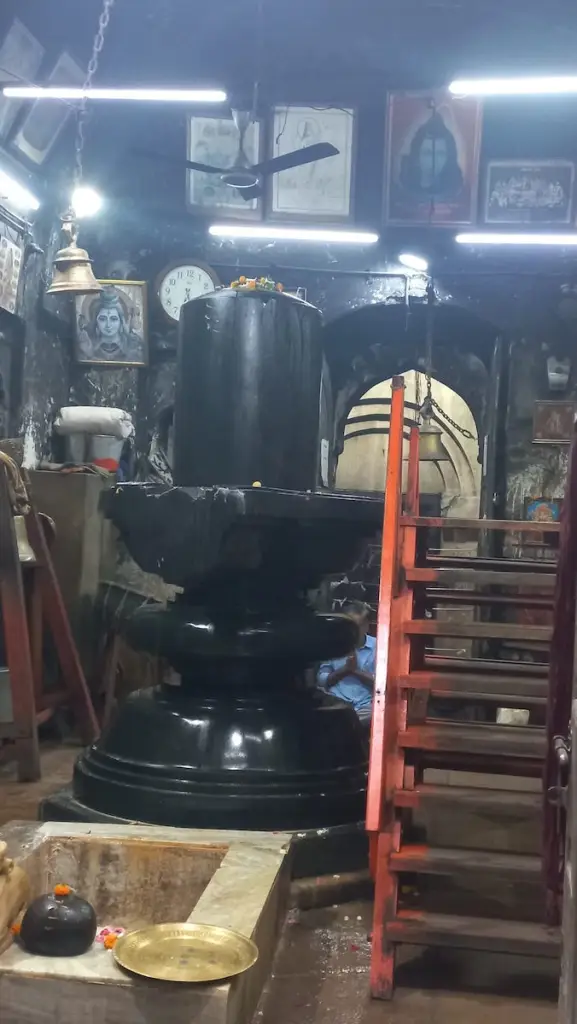
One more interesting object of the temple is its enormous Shivling.
This holy construction is approximately ten feet tall and is thus one of the most unusual representations of Shiva in Kolkata.
As a result of its great size, devotees make use of iron stairs in order to ascend to the top part of the Shivling during Abhishekam.
The massive scale of the Shivling has also led to a new local enigma.
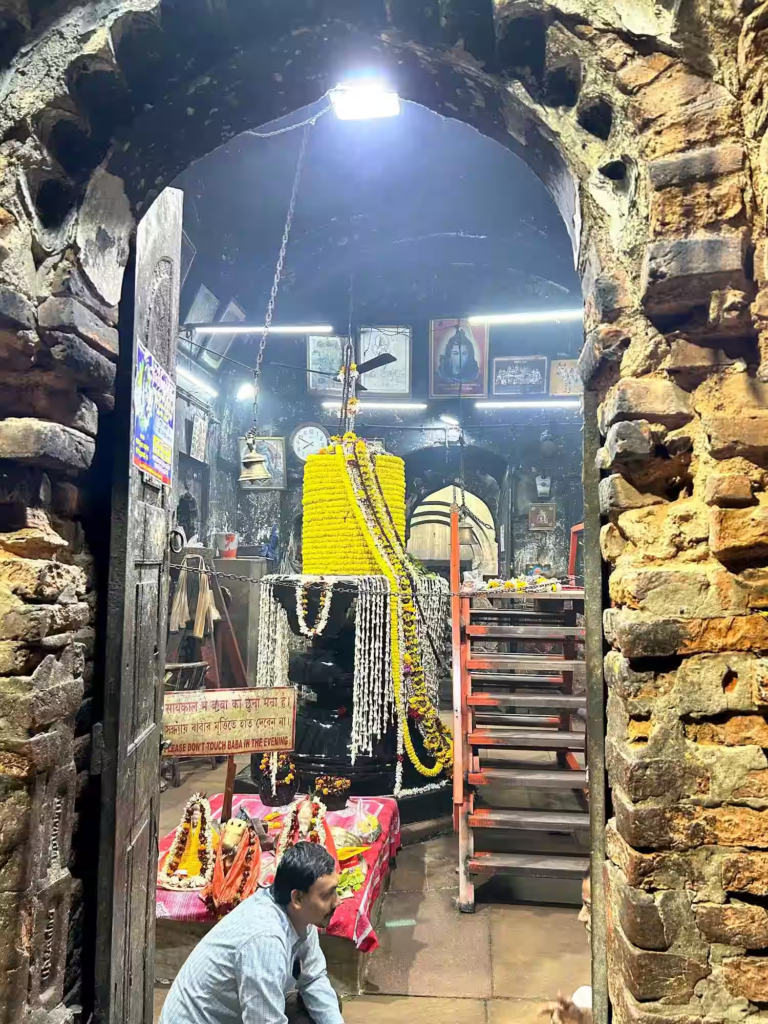
This is because some devotees think that it predated the construction of the temple since the entry seems too small for the huge structure to be transported inside.
While this idea has not been proved yet, it makes the history of the temple even more fascinating.
Architecture of the Ancient Temple
The Mota Mahadev Temple is an example of Bengal’s traditional Atchala architecture style.
It is about fifty feet high and built according to a very traditional design related to the architecture of temples in the region.
One of the distinctive features of this building is that there is a big banyan tree whose roots cover some parts of the temple.
The exposed bricks and old-looking walls give the temple an ancient look.
Although the temple looks old, it is a fine example of Kolkata architecture.
Religious Rites and Worship
Mangala Aarti takes place in the mornings in Mota Mahadev Temple according to the rites performed in the Hindu religion concerning Lord Shiva.
Other rites take place during the day after Mangala Aarti.
The Bhog Aarti takes place in the afternoon, and Sandhya Aarti is conducted in the evening.
There are many people who come to the temple to offer their prayers and perform other religious rites.
The temple holds high importance for the devotees of Lord Shiva on days associated with him, such as Mahashivratri.
It is advisable to check the timings of prayers before coming to the temple.
The Spiritual Significance of Mota Mahadev
For the devotees, the Shivling symbolises Lord Shiva and his spiritual laws of creation, destruction and rebirth.
The myths of the temple also signify the significance of the role of faith and oral transmission in the Indian religion.
Whether the myth about the chained Shivling is real or not, it proves the fact that the belief is transferred from one generation to another.
Mota Mahadev Temple represents the spirituality, history and culture of Kolkata in unity.
My Personal Favourite
The second personal feature of Mota Mahadev Temple which I really appreciate is the myth of the iron chains.
In particular, I am interested in how the ordinary architectural detail was turned into a myth preserved by means of oral transmission.
The large Shivling and the old appearance of the temple make it even more interesting.
Conclusion
The legend of Mota Mahadev Shivling is one of the many curious religious legends of Kolkata.
Thanks to its huge Shivling, mysterious iron chains, architectural style and history, the temple allows one to get acquainted with the spiritual tradition of Bengal.
Mota Mahadev will still be a vivid landmark of faith, folklore and cultural heritage of Kolkata in 2026.
About the Author