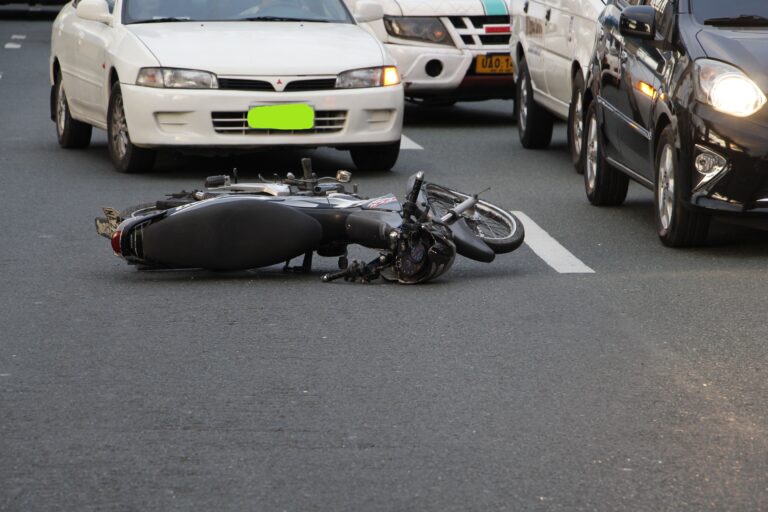
You’re easing your bike out of a parking slot when someone clips you, and now the indicator’s cracked and there’s a long scrape running down the side panel. The garage takes a look and puts the job at Rs 3,500. Your first instinct is to call the insurer, but for damage this small, that isn’t automatically the cheaper route. The decision turns on arithmetic more than instinct. Here’s what a small claim actually pays out, what it costs you at renewal, and how to work out your own break-even before you commit.
What Do You Actually Get Back on a Small Claim?
Less than the garage bill, nearly always. Two deductions sit between the estimate and the money your policy releases: a compulsory deductible and depreciation on the parts being replaced.
The deductible is a fixed amount you pay yourself on every own damage claim, and on two-wheelers it’s usually a small sum. Depreciation does the heavier work. Insurers write down plastic, rubber and nylon parts sharply, and those are exactly what breaks in a low-speed knock. For metal parts, the write-down follows the age of your bike.
So, on that ₹3,500 repair, built mostly around a plastic panel and an indicator assembly, the settlement could come to roughly half the bill. At a network garage, the insurer settles its share of a bike insurance claim directly with the workshop and you pay the rest at the counter. That’s a hypothetical illustration, and rates vary by insurer and by part.
A zero depreciation add-on, if you bought one, reduces or removes that depreciation cut, though these covers usually cap how many claims you can make in a year. Terms and conditions apply. Please refer to the policy wording for full details before purchase.
How Much Does a Small Claim Cost You at Renewal?
Your No Claim Bonus is a discount on the own damage portion of your premium, and it grows for every year you ride without claiming. It typically begins at 20 percent after one claim-free year and steps up to a maximum of around 50 percent after five.
One claim resets it. At your next renewal the discount drops to zero and has to climb the ladder again from the bottom.
That’s the cost riders tend to underestimate. You aren’t losing one year of discount, you’re losing the higher slabs you would have reached across the next few renewals as well. Terms and conditions apply. Please refer to the policy wording for full details before purchase.
When Does Filing a Claim Make Sense?
When the repair is large enough that absorbing it yourself would sting, or when someone other than you is involved. A bike insurance policy is built for losses you would struggle to fund from savings, and a scuffed panel rarely qualifies.
Filing usually works in your favour when:
- The estimate runs well above your deductible, the depreciation cut and the No Claim Bonus you would forfeit, taken together
- The damage is structural or affects safety, such as the forks, frame, brakes or wheel alignment
- Another person was injured, or another vehicle or someone’s property was damaged
- Your bike is new and you have little or no No Claim Bonus to lose
- You hold a zero depreciation add-on with claims still available under it
When is Paying for the Repair Yourself Cheaper?
When the bill is modest and your No Claim Bonus is worth more than the payout. This is the common case with cosmetic damage.
Paying out of pocket usually works out better when:
- The damage is only cosmetic, like a scratched panel, a scuffed mirror or a bent lever
- The estimate sits close to, or below, what you would pay anyway after the deductible and depreciation
- You are several years into a high No Claim Bonus slab and renewal is not far off
- Nobody got hurt, and no other vehicle or property came into it
Plenty of local workshops will respray a panel or straighten a bent lever for a fraction of what a fresh part costs, and that tilts the sums further in favour of paying it yourself.
If You Skip the Claim, Do You Still Have to Tell Your Insurer?
Telling your insurer about an incident is not the same as claiming for it. Most insurers ask you to report an accident within a short window, and reporting it doesn’t commit you to anything.
Where a third party is involved, inform your insurer regardless of what you decide. Injuries or damage to someone else’s vehicle or property can turn into a claim against you later, sometimes months later, and an unreported incident makes that harder to handle. A police report may be needed too, depending on what happened.
One practical point. If you think you might claim, don’t start repairs before the insurer has had a chance to inspect the bike.
How to Work Out Your Own Break-Even
Four numbers settle this, and you can gather all of them in about ten minutes.
- Get a written estimate from the garage, itemized by part and labour.
- Ask the workshop or your insurer roughly what the depreciation on those parts would be, then add your deductible. That total is your out-of-pocket share.
- Find your current No Claim Bonus percentage on your last renewal notice and work out what it saves you in rupees, across the next two or three renewals rather than just one.
- Compare. If the insurer’s likely payout is smaller than the discount you’d give up, the repair is cheaper and paid directly.
Most riders are surprised by how close those two numbers land.
Where That Leaves You
For genuinely minor damage, a claim usually isn’t worth making. Small repairs get shrunk by the deductible and by depreciation on exactly the kind of plastic parts that break in a low-speed knock, and the No Claim Bonus you give up keeps costing you at every renewal afterwards. Claims earn their keep on large repairs, safety-related damage and anything involving another person.
The numbers you need are already in front of you, in your policy schedule and your last renewal notice. Reading through them, or asking your insurer’s claims team how depreciation would apply to your specific parts, is a sensible step before you decide either way.
About the Author