Electric scooters are becoming a familiar part of everyday travel across Indian cities. Yet choosing one can feel less straightforward once buyers begin comparing the available options. Two models may appear similar, serve the same commute, and still carry noticeably different price tags.
That difference often raises an important question: what are buyers actually paying for? The EV scooter price reflects more than what is immediately visible in a showroom or specification table. Some differences influence the riding experience from the first journey, while others reveal their value through regular use and ownership.
Understanding where these variations come from can make comparisons more meaningful and prevent price alone from shaping the decision. Let us examine the seven factors working behind the final figure.
What Factors Influence the Price of an Electric Scooter?
An electric scooter combines mechanical, electrical, practical, and digital elements. Each factor contributes differently to its performance, usability, and overall ownership experience.
- Battery Capacity and Technology
The battery is one of the most valuable components within an electric scooter. Its capacity indicates how much electrical energy it can store. A higher-capacity battery can support longer journeys when paired with an efficient motor, suitable vehicle weight, and effective energy management.
Battery chemistry also affects energy density, weight, charging behaviour, and durability. Modern lithium-ion batteries offer a useful balance across these characteristics.
- Certified Riding Range
Range indicates how far an electric scooter can travel under specified testing conditions. It offers a useful reference for planning journeys between charging sessions.
Models offering an extended certified range may use larger batteries, efficient motors, or advanced energy management systems. These elements can influence the EV scooter price.
A longer range can support office commutes, errands, and leisure journeys within one charging cycle. It also adds flexibility when daily travel patterns change. Buyers can compare certified range with their regular travel distance. A suitable figure should comfortably cover familiar routes and occasional additional journeys.
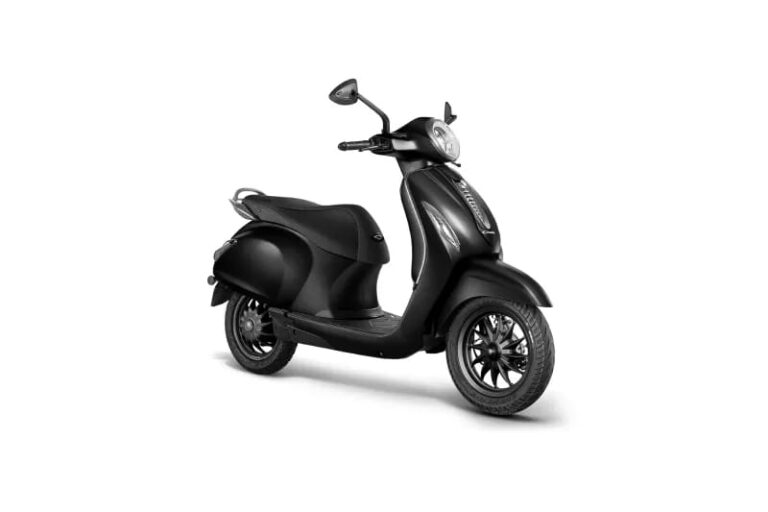
Bajaj Chetak C2501
Image Source: Bajaj Chetak
- Motor Output and Performance
The electric motor determines how the scooter responds during acceleration and regular riding. Its output also shapes speed and overall riding character.
A higher-powered motor can deliver energetic acceleration and confident performance on broader roads. Moderate output can complement relaxed travel through urban neighbourhoods.
Motor controllers also play an important role in managing power delivery. They help maintain smooth acceleration across varying speeds and riding situations.
- Charger Type and Charging Time
Charging convenience depends on battery capacity, supported charging rate, charger output, and thermal controls. Together, these factors shape the overall charging time. Some electric scooters use an onboard charger integrated within the vehicle.
Others provide an offboard unit that remains separate from the scooter. A compatible higher-output charger may shorten charging time when the battery supports that rate. This pairing requires suitable electrical and thermal management.
Charging controls monitor temperature, current flow, and battery status during each session. This technology supports a dependable and convenient charging experience.
- Materials and Build Quality
Construction materials influence durability, weight, appearance, and the scooter’s overall feel. They can therefore make a meaningful difference to the EV scooter price. Manufacturers may use metal, engineered composites, or a combination of materials.
Each option brings distinct qualities to structure, design, and everyday handling. Build quality also extends to panel alignment, paint finish, switches, lighting elements, and weather protection. These details shape visual and tactile appeal.
- Comfort and Practical Features
A scooter’s everyday value also depends on how comfortably it supports common journeys. Seat dimensions and riding posture influence comfort during longer travel. A spacious floorboard can offer convenient foot placement.
Well-positioned handlebars can support a natural posture while navigating busy city roads. Storage capacity is another useful consideration. Under-seat storage and glove compartments can hold helmets, bags, documents, and smaller essentials.
Reverse Mode and Hill Hold can simplify manoeuvring in specific situations. Ride modes can also adapt performance to different routes and preferences.
- Displays and Connected Technology
The display serves as the rider’s main source of vehicle information. It may present speed, range, battery level, ride data, and alerts. Screen technology can range from simple digital units to advanced colour displays.
Size, resolution, visibility, and interface design can all affect cost. Connected functions can include navigation, trip records, vehicle notifications, geo-fencing, and anti-theft alerts. Some scooters may also offer remote vehicle controls.
These functions may come as standard equipment, optional packages, or subscription-based services. Their format can influence the EV scooter price differently.
Make Every Feature Count in Your Final Choice
Choosing an electric scooter becomes easier when every feature is considered according to daily use. Begin with travel distance, charging access, and familiar routes. Comfort, storage, construction, and digital functions can then help refine the selection. This approach gives proper context to the EV scooter price.
A test ride adds valuable insight beyond the specification sheet. Riders can assess comfort, handling, acceleration, display clarity, and control placement.
Electric scooter brands such as Bajaj Chetak offer varied choices for different urban travel requirements. Comparing available options can reveal a suitable balance between everyday convenience, preferred capabilities, and long-term value.
About the Author