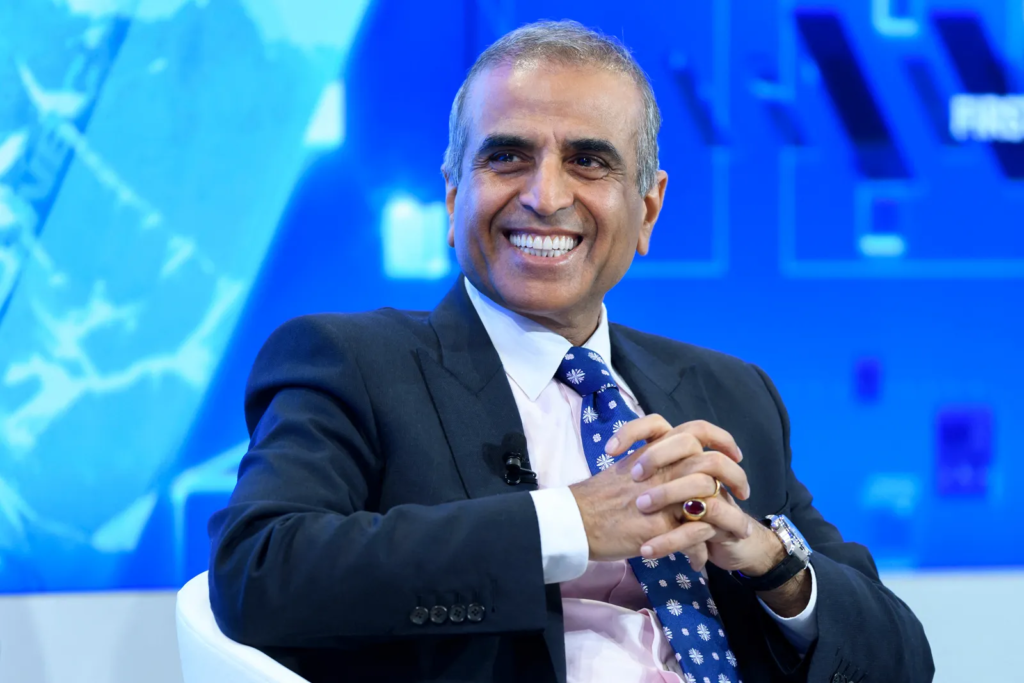
Success stories start with small steps, and that is what we see in the case of Sunil Bharti Mittal. He started with only Rs 20,000, which he borrowed from his father, and turned a small business into India’s largest telecom empire. By 202,6 his net worth is estimated to be around $34 billion, which places him among Asia’s top business leaders. His story is a study in determination, innovation, and the ability to see what others do not.
Early Life and Education
Sunil Bharti Mittal was born in 1957 in the city of Ludhiana in Punjab, India. It is from a family that placed great value on education and public service. His dad, Sat Paul Mittal, was a well-respected political figure and Member of Parliament; also, his mother, Lalita Mittal, was a key player in the family’s life.
Mittal grew up in Punjab, where he later attended high school, and enrolled in Panjab University in Chandigarh for an undergraduate program. While he did have the privilege of a privileged youth, he chose instead to create his own opportunities as a separate entity from his family’s politics. At a very young age, we see signs of his entrepreneurial personality.
At the start of his business adventure.
At the age of 18, Sunil Bharti Mittal took a loan of ₹20,000 from his father to start a small-scale manufacturing business with a friend. The business which did production of bicycle parts for local manufacturers in Ludhiana did moderately well. Though the business did do all right for him, Mittal soon saw that better chances lay beyond the scope of conventional manufacturing.
In the early 1980’s, he turned to the import of portable generators into India. That business grew quickly until government policy changed to restrict imports. Instead of giving up, Mittal went on to find another opportunity,y which in turn shaped his future.
Entering the Telecommunications Industry
Sunil Bharti Mittal’s turning point was when he saw the growing demand for telecom services in India. In the 1980,’s telephones were still a luxury, and mobile communication was in its infancy.
He founded Bharti Telecom and at first produced push-button telephones, which replaced the former rotary phones, which were at the time very common in our country. Also, he had a great affinity for new tech, which in turn made people see him as a very innovative businessman.
When in the 1990s the Indian government opened up the telecom sector to private players, Mittal took action. In 1995 with the launch of Bharti’s mobile services which became Airtel at that time which was at a point when mobile phones were still a luxury and not very common, Airtel put an emphasis on expansion of coverage and better customer service.
In the coming two decades, Airtel grew to become one of the largest telcos in India. Also, it expanded into Africa and several South Asian countries, where it served in the hundreds of millions.
Building a Global Business Empire
Sunil Bharti Mittal took Bharti Airtel from a local Indian telecom player to a global communications force. Under his watch, Airtel invested in the growth of its network infrastructure, digital services, broadband Internet, enterprise solutions, and data connectivity.
The company also entered into agreements with foreign tech players, which in turn enabled it to stay relevant in the very dynamic digital environment. Today,y Airtel is known to be a worldwide leader in the telecom industry, which we see connecting people across many continents.
In telecommunications, which was a given for Mittal, he instead put his focus into various other business areas via the Bharti Group. The group operates in insurance, retail, data centers, digital infrastructure, space communications, and education. This diverse approach, in turn, urn strengthened the company’s long-term growth.
In 2026, Sunill Bharti Mittal’s net worth will be what it is now.
As of 2026, Sunil Bharti Mittal’s net worth is reported to be around $34 billion*, Also he has mainly acquired that wealth through his large stake in Bharti Airtel, which also includes other assets of the Bharti Group.
Mobile internet growth, digital payments, enterprise connectivity, and cloud services have seen Airtel’s expansion. Also, he has reported strong financial performance, which in turn has fueled his personal growth, and we see an expansion of international operations over the years.
Although a very wealthy man i,n Indiais true, Mittal is known to maintain a private and almost low-key lifestyle as opposed to that of many other global billionaires.
Philanthropy and Social Contributions
Sunil Bharti Mittal is of the view that for a business to be successful, it also has to have a social element. Through the Bharti Foundation, which he has put in place, he has made investments in the area of education, particularly in rural India. The foundation, which is a part of his greater vision, supports thousands of schools and educational programs, which is why we are seeing it play a key role in bringing quality education to the underprivileged communities.
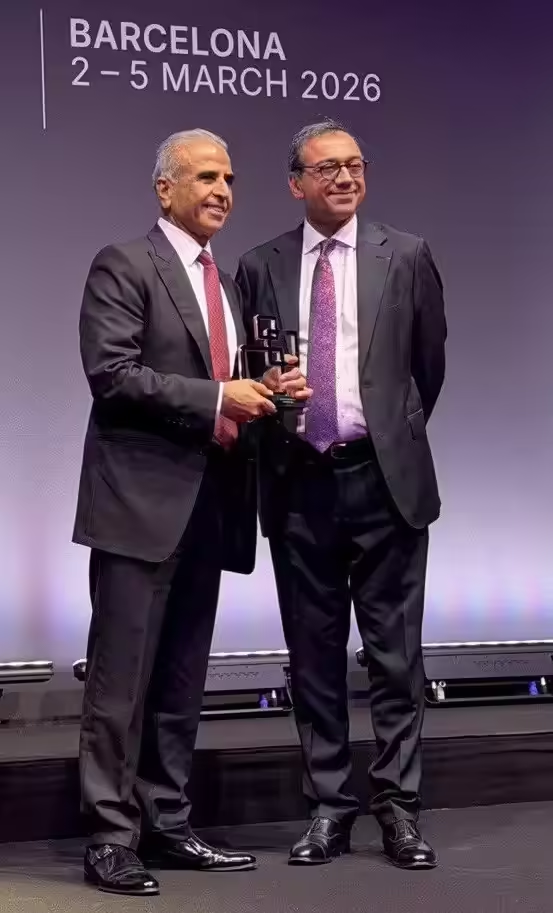
His charity includes work in skill development, digital inclusion, and community welfare. These initiatives put forth his view that education is a key element in national development.
Leadership Style and Legacy
Mittal’s greatest strength was his ability to adapt to change in the market. He did not resist tech change but instead embraced innovation and grew partnerships, which in turn strengthened his businesses.
His leadership is in what we see as a focus on long-term play, customer satisfaction, operational efficiency, and continuous innovation. These have been the elements that have made Bharti Airtel a very trusted telecom brand in spite of great competition.
Sunil Bharti Mittal’s story which proves that what defines successful entrepreneurs is how they rise to the challenge and overcome it as they go along, and not where they start. From taking a loan of $300 to build a business that is now worth billions, his journey is an inspiration to the aspiring entrepreneurs in India andaround thee worlr.
Conclusion
The story of Sunil Bharti Mittal is that of vision, perseverance, and determination. From a small-scale manufacturing business that he ran, he saw the telecom sector’s potential and went on to build what is today India’s preeminent companies. In 2026 he is estimated to have a net worth of $34B and this seems like the outcome of decades of strategic thinking , calculated risk taking and hard work. While the financial success part is impressive , it also matters that his input for education and social development is strong, which basically keeps his legacy from staying only in the business world . His life is a real pushy example , that big achievements sometimes come from what we do on a random day out of the blue, not from some grand plan everyone can see.
About the Author