Rabindranath Tagore is still the preeminent figure in Indian literature and culture. As the “Bard of Bengal,” he was a poet, philosopher, songwriter, novelist, dramatist, and painter, which he still is in 2026. His body of work in literature, music, education, and art made him a world icon and a symbol of what is creative and humanistic.
Early Life and Education
Rabindranath Tagore was born May 7, 1861, in Kolkata, India, into a very cultural and also social elite Bengali family. His father, Debendranath Tagore, was a philosopher and social reformer. Tagore, from a very young age, showed great talent, which was also recognized very early on; he began to write poetry as a child. Although he went to school in England for a short while, he was more drawn to independent study, which he engaged in heavily. He put most of his energy into literature and art.
Literary Achievements
Tagore redefined Indian literature with his individual style of writing and range of emotions. He won the world over with his poetry collection “Gitanjali”. In 1913, he had the honor of becoming the first non-European to win a Nobel Prize in Literature. Also, a common theme in his works was that of nature, spirit, love, humanity, and social issues.
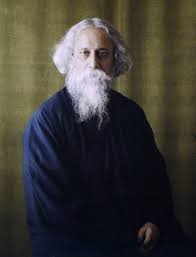
Apart from poetry, which Tagore wrote, he put out novels, essays, short stories, and plays. He published “Gora”, “The Home and the World” and “Kabuliwala” which are very much of his which are still very popular. Also, his works are a part of school and university curricula all over the world.
Contribution to Music and Education
Rabindranath Tagore wrote over 2000 songs, which we know today as Rabindra Sangeet. Also, his compositions inspired the national anthems of both India and Bangladesh, which in turn has made his legacy even more impressive.
He established Visva-Bharati University at Santiniketan, which put forth the idea of a mix between traditional Indian thought and modern education. Today, the school is still very much a preeminent educational institution in India.
Legacy in 2026
In the present day, we see that Tagore’s influence is still very much alive in literature, music, and education. He is celebrated around the world on his birthday, which sees outpourings of culture, poetry readings, and music. Tagore’s philosophy of peace, creativity, and universal humanity, which he put forth, continues to inspire today’s generations.
Conclusion
Rabindranath Tagore went beyond the scope of a poet. He was a visionary thinker, who, in his works he embedded elements that shaped Indian culture and which also won him global recognition. Today, we see his work as still very much relevant, and because of this, he is considered to be among the greatest in terms of world literature and history.
About the Author