
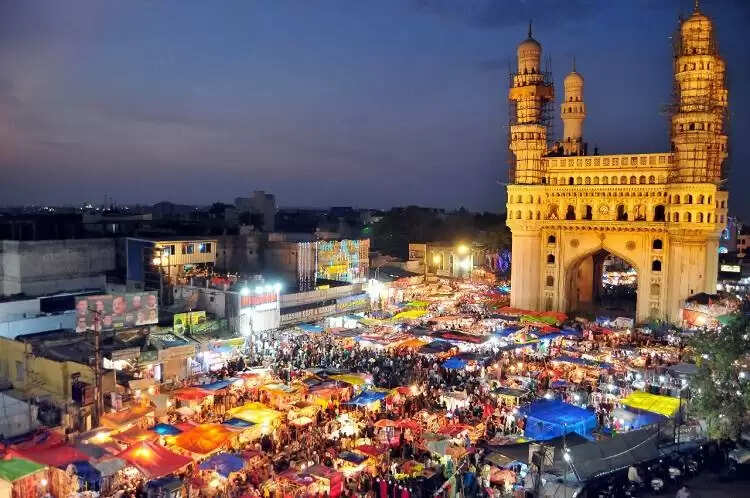
Hyderabad, the capital city of Telangana in southern India, is a city that seamlessly blends tradition with modernity. Renowned for its rich cultural history, the city boasts a diverse architectural landscape that reflects the influence of various dynasties and rulers who have left their mark over the centuries.

Historical Background:
The architectural tapestry of Hyderabad can be traced back to the Qutb Shahi dynasty, which laid the foundation for the city in the late 16th century. The iconic Charminar, built in 1591 by Sultan Muhammad Quli Qutb Shah, stands as a symbol of Hyderabad’s historical significance. This grand monument with its four towering minarets is a prime example of Indo-Islamic architecture.
Qutb Shahi Tombs:
The Qutb Shahi Tombs, situated near the Golconda Fort, are another testament to the architectural prowess of the Qutb Shahi dynasty. These tombs, built in Persian, Indian, and Pathan architectural styles, showcase intricate carvings and delicate ornamentation. The unique blend of influences from different cultures makes these tombs a visual delight for history and architecture enthusiasts.
Golconda Fort:
The Golconda Fort, a majestic citadel perched on a granite hill, is an architectural marvel that dates back to the Kakatiya dynasty. Its innovative acoustics, including the famous “clapping hands” at the Fateh Darwaza, demonstrate the engineering brilliance of its time. The fort complex also houses palaces, mosques, and other structures that reflect the grandeur of medieval Deccan architecture.
Mughal Influence:
The city’s architectural landscape underwent a transformation during the Mughal era when Hyderabad became a part of the Mughal Empire. The Mecca Masjid, one of the largest mosques in India, stands as a testament to this period. Commissioned by Muhammad Quli Qutb Shah and completed by Emperor Aurangzeb, the mosque showcases a synthesis of Persian and Indian architectural styles.
Chowmohallah Palace:
During the Asaf Jahi period, the Nizams of Hyderabad added their unique touch to the city’s architecture. The Chowmohallah Palace, constructed over several decades, exemplifies the Nizami style with its opulent courtyards, ornate palaces, and exquisite gardens. The Khilwat Mubarak, the heart of the palace, is a fine example of European and Persian influences on Indian architecture.
Modern Architecture:
As Hyderabad evolved into a modern metropolis, contemporary architects embraced a fusion of global styles. The iconic Hi-Tec City, with its glass-clad skyscrapers, symbolizes the city’s leap into the 21st century. The Rajiv Gandhi International Airport, designed by renowned architect Hafeez Contractor, stands as a state-of-the-art structure that seamlessly integrates functionality with aesthetics.
Conclusion:
Hyderabad’s architectural legacy is a captivating journey through time, reflecting the city’s dynamic history and cultural diversity. From the regal structures of the Qutb Shahi dynasty to the Nizami opulence and the modern skyline, each architectural marvel contributes to the city‘s unique identity. As Hyderabad continues to grow, its architectural landscape remains a testament to its rich heritage and vibrant spirit.
About the Author