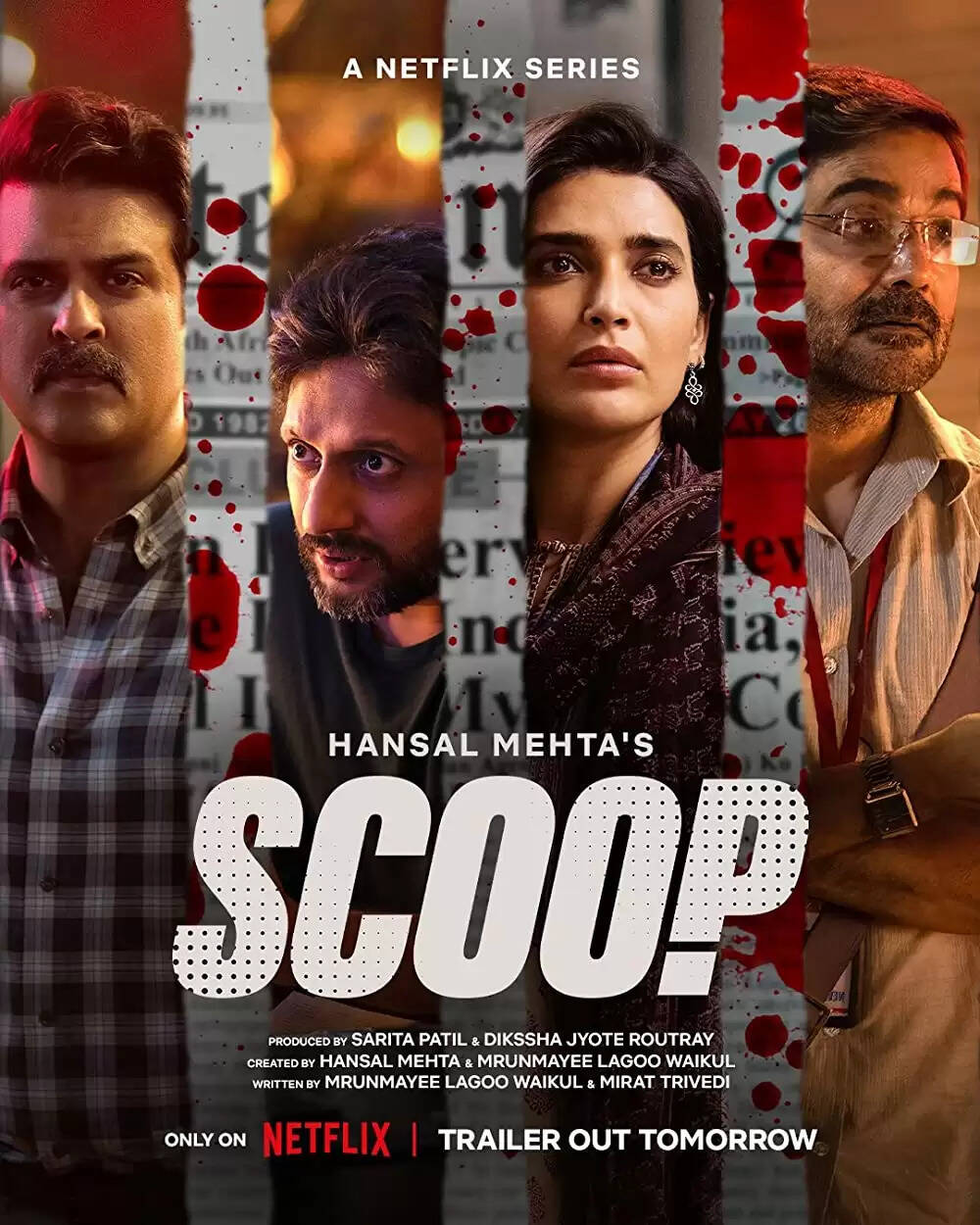
“Scoop” is a gripping Netflix series that takes inspiration from Jigna Vora’s book. The story revolves around Jagruti Pathak, a passionate journalist with a tragic past, who works for the Eastern Age newspaper. Despite facing challenges in a male-dominated field, Jagruti is determined to deliver front-page news and make a name for herself.
When Jagruti receives a call about the death of Iqbal Kaskar’s driver, Hussain, she senses that it’s a breaking news story. While the police blame Chhota Rajan for the murder, senior journalist Jaideb Sen has a different theory. According to his belief, Rajan would have chosen to carry out the murder of Hussain at his residence in Byculla instead of shooting him near Kaskar’s house. Jagruti becomes intrigued by Sen’s theory, suspecting that there’s more to the story. She wonders why Rajan would take the blame for the murders and questions what the Mumbai Crime Branch might be hiding.
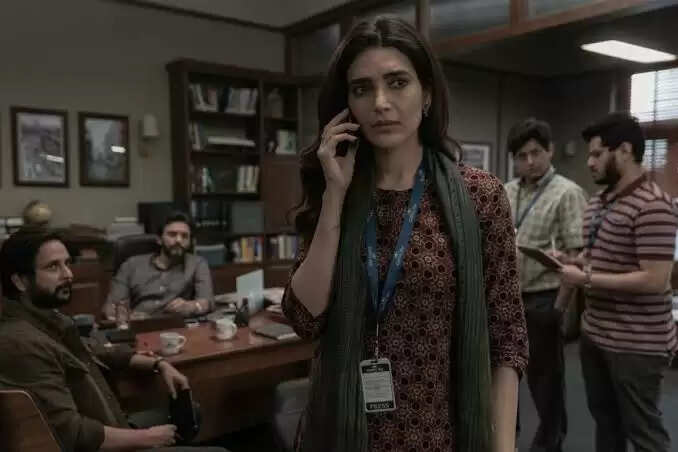
Jagruti discusses Sen’s theory with her mentor and editor-in-chief of Eastern Age, Imran. He encourages her to pursue the truth rather than chasing controversy. With Imran’s support, Jagruti starts investigating further. However, she faces a setback when Sen sternly warns her to stay away from the case. This only fuels her determination to be the first to uncover the truth. Unfortunately, her plans are interrupted when she decides to take a trip to Kashmir to spend time with her family, including her son.
While Jagruti is away, she receives the shocking news of Sen’s death. He was shot multiple times by unidentified assailants on a bike. This leaves Jagruti wondering who could be behind Sen’s murder and what the motive might be.
Before leaving for Kashmir, Jagruti attempts to contact Chhota Rajan to get his perspective on the Hussain story. Through her source, she arranges a meeting with Rajan’s associate, Samson. During their conversation, Samson expresses his resentment towards Sen, believing that he had connections with Dawood Ibrahim. Samson proposes a deal to Jagruti, offering an exclusive interview with Rajan in exchange for information about Sen’s Europe trip. However, Jagruti refuses the deal.
Unexpectedly, Jagruti receives a call from Chhota Rajan himself after Sen’s death. Rajan confesses to killing Sen, claiming that Jagruti had provoked him with her actions against Sen. This revelation leaves Jagruti shocked and bewildered, as the people she once worked with turn against her.
In a press conference, the Mumbai Crime Branch announces that they have evidence proving Jagruti provided Sen’s details to Chhota Rajan. They charge her under the MCOCA Act (Maharashtra Control of Organized Crime Act). The Police claim to have traced 36 phone calls between Rajan and Jagruti, but in reality, there is no concrete proof of such calls. Jagruti’s arrest is portrayed as a victory for justice, and the media quickly paints her as an ambitious woman who compromised her ethics.
Jagruti hires Advocate Vashisht to defend her case. During the courtroom proceedings, Vashisht exposes the baselessness of the charges against Jagruti. He points out that the alleged evidence, including a threatening email and phone calls, is flimsy and can be easily explained. Vashisht argues that Jagruti’s arrest was a result of using the MCOCA Act to justify her detention, as the only evidence against her was a phone call in which Rajan confessed her involvement. He highlights the unreliability of extrajudicial confessions and questions the state’s case.
Vashisht also disputes the claim that Jagruti’s phone records show 36 calls with Chhota Rajan. He presents expert witnesses who testify that the phone records can be easily manipulated and fabricated. Vashisht argues that the Mumbai Crime Branch failed to conduct a thorough investigation and relied on circumstantial evidence to frame Jagruti.
As the trial progresses, Jagruti’s reputation takes a severe hit. The media portrays her as a criminal and sensationalizes the case, further damaging her public image. However, there are some journalists who believe in her innocence and start digging deeper into the story.
During the trial, Jagruti’s defense team uncovers crucial evidence that raises doubts about the credibility of the police investigation. They discover that Hussain, the murdered driver, had a long history of involvement with criminal activities and had connections with both Chhota Rajan and Dawood Ibrahim’s gang. This revelation suggests that there might be a larger conspiracy at play.
Jagruti’s defense team also presents witness testimonies that contradict the police’s version of events. They bring forward individuals who claim to have seen Hussain in different locations around the time of the murder, casting doubt on the timeline presented by the prosecution.
As the evidence mounts, the courtroom drama intensifies. The media starts to question the Mumbai Crime Branch’s handling of the case and raises concerns about the misuse of the MCOCA Act to silence journalists.
In a shocking turn of events, a key witness emerges who reveals that he was coerced into giving a false statement against Jagruti. He confesses that he was threatened by the police to implicate her in the crime. This revelation exposes the corruption within the law enforcement system and strengthens Jagruti’s defense.
With the mounting evidence and the unraveling of the police’s tactics, public opinion begins to shift in favor of Jagruti. The case gains significant media attention, and people demand justice and accountability for the misuse of power.
Finally, the verdict is delivered, and Jagruti is acquitted of all charges. The court recognizes the lack of concrete evidence against her and condemns the manipulation and misconduct of the Mumbai Crime Branch. The judge also orders an investigation into the actions of the police officers involved in the case.
Jagruti’s acquittal becomes a turning point in the fight for press freedom and exposes the vulnerabilities in the criminal justice system. She emerges as a symbol of resilience and determination, vowing to continue her pursuit of truth and justice through responsible journalism.
The series ends with Jagruti returning to Eastern Age, where she is hailed as a hero by her colleagues. She vows to expose the truth behind the Hussain murder and bring the real culprits to justice, all while continuing to fight against the suppression of the media.
“Scoop” offers a thrilling narrative that delves into the world of journalism, corruption, and the power dynamics that shape the truth. It explores the challenges faced by journalists and the importance of standing up against injustice, even in the face of adversity.
About the Author