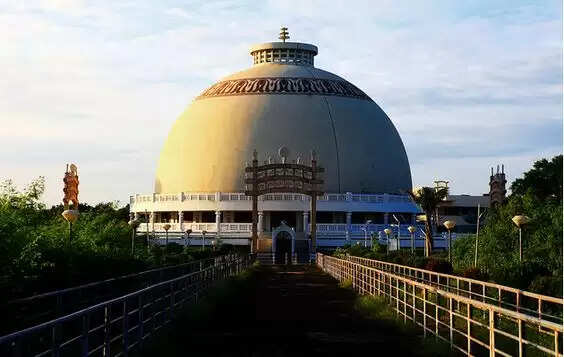
Overview
Nagpur, an important historical and industrial legacy, is in northeastern Maharashtra, India. Originally a Maratha capital, it has developed into a thriving industrial and educational hub around the Nag River.
Evolution in History
Founded by the Gond ruler Bakht Buland in the early 1700s, Nagpur became to be an important hub for the Maratha Confederacy. But starting in 1817, British influence grew, and as a result, it was added to the Central Provinces in 1861. The Great Indian Peninsula Railway’s arrival in 1867 was a game-changer, catapulting Nagpur into prominence as a major trading hub.
Industrial Advancement
Fertile soils encouraged the rise in cotton production, which led to a flourishing industrial landscape in Nagpur. This expansion sparked the development of textile mills and a variety of other businesses, such as the manufacturing of metal goods and ferromanganese. The city’s economic growth was further stimulated by its advantageous location at the intersection of important transportation links.

Technological Progress
Nagpur has embraced technology-related enterprises in the last few decades, especially in software creation. The city’s remarkable growth—its population doubled between 1981 and 2011—has been attributed to this shift.
Centre for Culture and Education
Nagpur is the region’s hub for education and culture in addition to its industrial might. Founded in 1923, the University of Nagpur serves as the hub for a network of associated colleges. Prominent research institutions are also located in the city, such as the National Cotton Research Institute and the National Environmental Engineering Research Institute.
Agriculture and the Beauty of Nature
Nagpur’s natural setting provides a tranquil backdrop, with sacred hills sprinkling the undulating plateaus surrounding it. The area is rich in agriculture, with well-known orange orchards coexisting with crops like cotton and sorghum. The region’s attraction is further enhanced by protected natural areas, including tiger sanctuaries and national parks.
About the Author