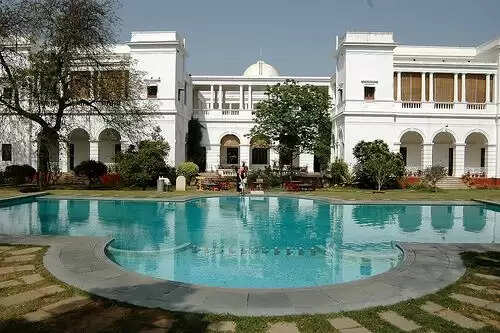
Establishment and Management
In 1804 the British East India Company established the small princely kingdom of Pataudi in India. It was a component of the Conquered and Ceded Provinces, governed by the Commissioner of Delhi, and part of the Delhi Territory. The state, which spanned 52 square miles, was made up of 40 villages under the Pataudi family’s administration in addition to the town of Pataudi.
Historical Initiation
The British East India Company named Afghan Muslim Pashtun Faiz Talab Khan, a member of the Barech tribe, the first Nawab in 1804, marking the beginning of Pataudi State. His support of the British cemented Faiz Talab Khan’s standing during the Second Anglo-Maratha War. Ancestors of the Pataudi family left Afghanistan during the Lodi dynasty’s rule in the sixteenth century.
Leading Persons
Iftikhar Ali Khan Pataudi, the eighth Nawab, is one of the most famous people from Pataudi State. He was a famous cricket player who played for both England and India, as well as the captain of the Indian cricket team. The final Nawab, his son, led the Indian cricket team as well.

Assimilation into India
Pataudi State was merged into the Dominion of India in 1948 following the finish of the British Raj and India’s political unification. 1971 the 26th amendment to the Indian Constitution was ratified, abolishing all official representations of princely India, including titles and privileges.
Ownership and Legacy
Saif Ali Khan, a well-known actor in Indian cinema and a prominent member of the Pataudi family, currently owns the once-hotel Pataudi Palace on a private basis.
Leaders and Statistics
Throughout its history, the Nawab title has been used to govern Pataudi State. In 1941, the state’s population was predominantly Hindu, with a sizeable Muslim minority and a negligible proportion of adherents to other religions.
About the Author