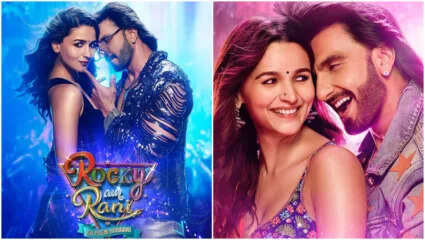
Karan Johar, the renowned filmmaker known for his family dramas, has once again made waves with his latest offering, “Rocky Aur Rani Kii Prem Kahaani.” Unlike some of his previous films where heroines seemed to lack agency, this movie brings forth a refreshing character in Alia Bhatt’s Rani Chaterjee, a firebrand journalist who challenges patriarchal norms both professionally and personally.
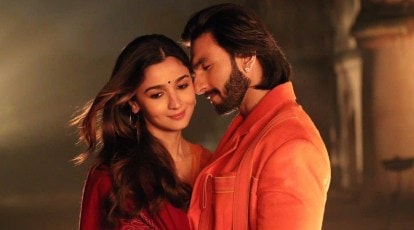
In a genre dominated by traditional family values and male-centric narratives, “Rocky Aur Rani Kii Prem Kahaani” stands out by giving its female lead a strong voice and agency. Unlike Kajol’s Anjali in “Kuch Kuch Hota Hai” or Preity Zinta’s Naina in “Kal Ho Na Ho,” who meekly followed fate and male characters’ decisions, Rani Chaterjee stands her ground and challenges the deeply entrenched patriarchy in her family.
Jaya Bachchan’s portrayal of Dhanalakshmi Randhawa, the family matriarch, adds another layer to the narrative. She rules her family with an iron fist, perpetuating the cycle of patriarchy, and conditioning her son, played by Ranveer Singh’s Rocky Randhawa, to treat his wife as a doormat. The film daringly shows how the patriarchy stems from women, for women, highlighting the complexity of gender dynamics within families.
As fate brings Rocky and Rani together, their unlikely romance unfolds amidst cultural and intellectual differences. However, the main obstacle lies in their families, which leads to an absurd yet entertaining plan of switching homes for three months. The film showcases the clash of values and mindsets between the two families, adding depth to the narrative.
One pivotal scene that stands out is when Tijori, played by Aamir Bashir, conditioned by his mother’s venom, tries to assert control over Rani, and Rocky stands up for her, pushing away Tijori’s finger. This moment signifies a turning point in the narrative, where the theme of unlearning ingrained behaviors and challenging the status quo comes to the forefront.

Through Rani’s influence, the Randhawa household begins to question the deep-seated patriarchy that has been upheld for generations. Ailing Dharmendra, played by Kanwal Singh, Rocky’s grandfather, plays a pivotal role in initiating this unlearning process. He encourages Tijori to confront his emotions, breaking free from his conditioned behavior.
The film delicately touches on several social issues, including cancel culture, cultural appropriation, and body-shaming, addressing them without becoming overly preachy. It emphasizes the importance of breaking free from societal norms and challenging traditional gender roles.
Ultimately, “Rocky Aur Rani Kii Prem Kahaani” delivers a heartwarming tale of love and acceptance, proving that love can conquer all barriers, including those imposed by society and family. Alia Bhatt and Ranveer Singh’s on-screen chemistry adds depth to their characters, making the audience root for their happy ending.
In conclusion, Karan Johar’s “Rocky Aur Rani Kii Prem Kahaani” is a step forward in Bollywood’s family drama genre, giving its female lead agency and portraying the complexity of gender dynamics within families. By addressing societal stigmas and advocating for unlearning ingrained behaviors, the film leaves a lasting impact on the audience. As Jaya Bachchan’s character offers her secret ladoo recipe as a symbol of acceptance and blessings, the movie resonates with the message that love and understanding can overcome even the most significant societal barriers.
About the Author