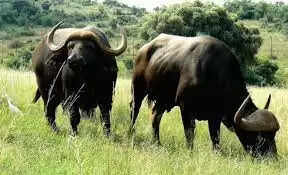
Buffalo cultivation, in India holds immense significance in the country’s agrarian and country economy. Loved for their tall drain surrender, lean, and meaty carcasses, buffalo play a crucial part in supporting the jobs of millions of small and marginal ranchers. This comprehensive direct investigation investigates the significance of buffalo cultivation, well-known breeds, cultivation setup considerations, fetched investigation, benefit potential, opportunities, challenges, and best practices.

Why Buffalo Cultivating is Vital in India
Dominant Share in Drain Production
Buffaloes contribute over 50% of India’s add up to drain generation, with around 91.82 million tons in 2019.
Their drain contains 7–9% fat, about twofold that of bovine drain, making it perfect for ghee, butter, cheese, and conventional sweets.
Agricultural Back, and Sustainability.
Buffaloes give draft control for furrowing and tilling.
Manure acts as natural compost, and helps in biogas production.
Resilience, and Adaptability.
Hardy creatures that flourish in different climates, nourish on eddies and buildups, and stand up to tropical diseases.
Contribution to the National Economy
Livestock contributes to India’s rural GDP.
India is the biggest exporter of buffalo meat (carabeef).
Socio-Cultural Significance
Integral to rustic conventions and wholesome security.
Popular Buffalo Breeds in India
Murrah (Haryana, Punjab, Delhi)
Jet dark, enormous body, firmly coiled horns.
Highest drain surrender (1500–2500 liters per lactation, 7–8% fat).
Widely utilized for crossbreeding.
Jaffarabadi (Gujarat)
Heaviest buffalo breed, with long, hanging horns.
Produces 1000–1800 liters of milk per lactation (7–9% fat).
Also utilized for overwhelming draft work.
Bhadawari (UP & MP)
Copper-colored with two particular white neck lines.
Milk surrender lower (752–810 liters), but exceptionally tall fat (up to 13%).
Nili-Ravi (Punjab)
Black with white markings (“Panj Kalian”).
Milk abdicate 1500–1800 liters (6.5% fat).
Docile personality, moreover, is utilized for draught.
Mehsana (Gujarat & Maharashtra)
Crossbreed of Surti and Murrah.
Produces 1200–1500 liters of drain with 6.8–9.5% fat.
High versatility, and great breeding regularity.
Setting Up a Buffalo Farm
Land & Foundation:- Ventilated sheds, water supply, grub capacity, and squander management systems.
Selection of Buffaloes: Sound, high-yielding breeds from dependable breeders.
Feeding Administration: Adjusted the count of calories of green grub, dry grain, concentrates, and mineral supplements.
Health Administration: Customary immunization, deworming, and veterinary care.
Breeding Administration: Manufactured insemination or common breeding, calf raising, and calving care.
Waste Administration:- Biogas plants and composting for manure.
Cost Analysis
Initial Investment:-
Buffalo buy (₹50,000–₹1,50,000 each)..
Shed development (₹60,000–₹1,40,000).
Chaff cutter (₹25,000–₹50,000).
Water source & borewell (₹50,000–₹2,00,000).
Recurring Expenses:-
Feed (60–70% of to cost).
Labour (₹4,500–₹15,000 per month).
Healthcare, breeding, protection, utilities and maintenance.
Example (5 Murrah Buffaloes):-
Initial speculation: ~₹6.15 lakh.
Annual repeating fetched: ~₹3.37 lakh.
Conclusion
Buffalo cultivation in India is a profoundly beneficial venture when overseen productively. With solid demand for drain, meat, and fertilizer, along with government back and developing opportunities in value-added dairy and biogas generation, buffalo farming can elevate provincial vocations. Be that as it may, victory depends on vital planning, breed determination, fetched control, and showcase mindfulness.
About the Author