

Every day, new terms appear as the world of internet culture evolves rapidly. Some of them fade fast, and some of them linger and become the subjects of bigger cultural discourses. Thought Daughter is one of such phrases. Although it might seem that it is another social media label, the meaning of the term has multiple layers of meaning that are connected to identity, emotionality, and contemporary womanhood.
The Origin: Reclaiming a Narrative
The term was coined in reaction to a misogynistic and problematic internet query that contrasted stereotypes on sons and daughters. Online users were smart in rebranding a derogatory label. “Thot” became “thought.” What was intended to offend was made thoughtful and intellectual.
This shift is significant. It shows how young people are now actively fighting against the negative stories and influence on words to change the meaning to make it sound empowering and not shameful. In that regard, the “Thought Daughter is not merely a meme, she symbolises the efforts to fight the stereotypes.
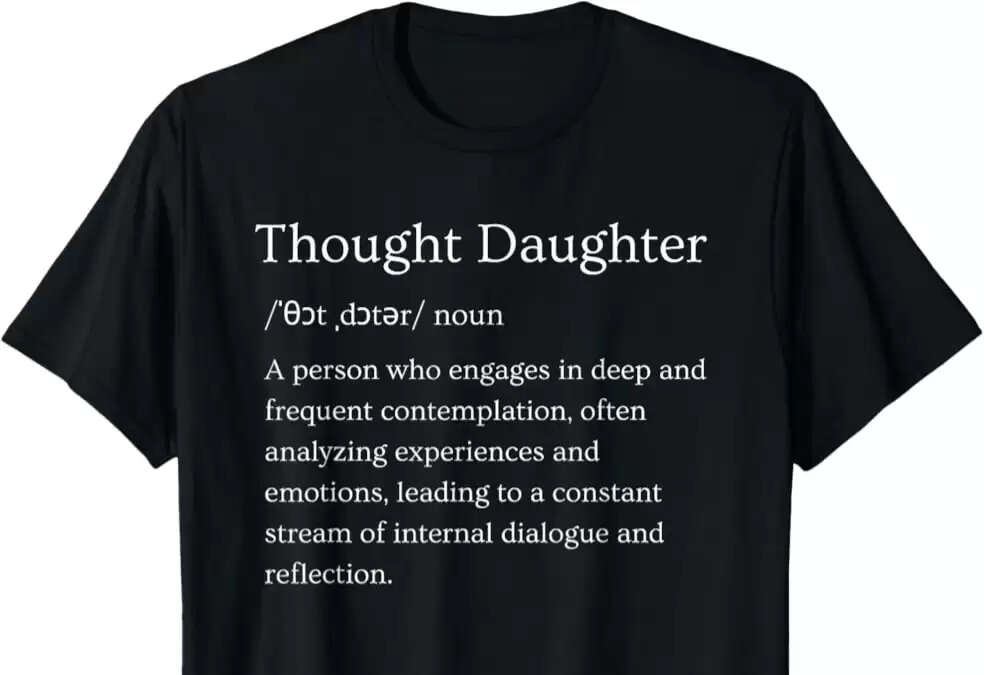
Defining a Thought Daughter
A Thought Daughter is commonly defined as a person who:
- Reflects on life, relations, and society.
- Emotions are felt full of passion and are overthought.
- Loves to read, write notes, do art, music, or philosophise.
- Thinks but overanalyses situations as well as learns.
- Appreciates emotional intelligence and self-awareness.
She is reflective, doubting, and most of the time, extremely sensitive. Whereas other people can rush through their experiences, she takes time to interpret them. This tendency can be occasionally misconstrued to mean that I was being too sensitive or dramatic, but the truth is that it is a sign of richness.
The Psychological Perspective
Psychologically, the personality of the “Thought Daughter” fits the characteristics such as a high level of emotional intelligence, empathy, and introspection. According to research studies in personality psychology, open people with high neuroticism always take time to reflect and analyse emotions in great depth.
Nonetheless, being a Thought Daughter is not the state of being anxious and overthinking. It is about awareness. It is concerning questions such as:
- Why do I feel this way?
- What is the meaning of this experience?
- How can I grow from this?
This internal monologue may result in good self-awareness and development.
Cultural Relevance in Modern Times
The modern world is stressful and hectic. Social media encourages unending comparison, immediate response, and superficial response. The Thought Daughter, on the contrary, is a symbol of slowness and contemplation. She does not write short captions but long ones. She reenacts dialogues in her mind. She derives her sense from the words of the song and book verses.
This archetype is particularly close to young women who have to find their identity, career, relationships, and expectations of society. It confirms the fact that not to be weak is to be deep. The problem of emotional complexity is not a flaw. Overthinking is not always an issue, however, it may be considered a strength when it is properly balanced.

Strengths and Challenges
Just as any personality aspect, being a Thought Daughter has its benefits as well as difficulties.
Strengths:
- Deep empathy
- Creative expression
- Strong self-awareness
- Thoughtful decision-making
Challenges:
- Overthinking
- Emotional overwhelm
- Inability to let things go.
- Self-doubt
The key lies in balance. The power of reflection should go together with action and self-compassion.
More Than a Label
Finally, it does not fit into a strict category, which Thought Daughter is about. It is a playful but significant method of acknowledging a form of emotional and intellectual profundity that is not especially obvious. It motivates thoughtful people to perceive their sensitivity as being their strength instead of their weakness.
In a world where loudness and speed are so valued, the Thought Daughter reminds us of the strength of silent thought. She shows us that the greatest journeys at times are not external at all but internal.
About the Author