A Mezzanine Floor is an intermediate floor that acts as a bridge between two separate levels within the same house and typically opens up to the lower level; this design creates a sense of openness between both floors. The word “Mezzanine” derives from the Latin word “Medianus”, which translates literally as “In the Middle”; hence, the name and its position within the vertical space occupied by a Room. In houses with double-height ceilings, the Mezzanine Floor occupies only a section of the overall floor area and therefore serves as both an attractive design element as well as a means of providing additional usable space for several functions without the need to make a significant change or addition to the structure itself by creating an entire upper level.
A brief history of the Mezzanine can be traced back to Roman times and has evolved into widespread use during the 17th century. The two most common uses for Mezzanine spaces were in theatres – adding seating and improving sightlines – and in warehouses and factories – providing additional shelving and storage for inventory, typically made out of metal beams or columns and/or prefabricated structures.
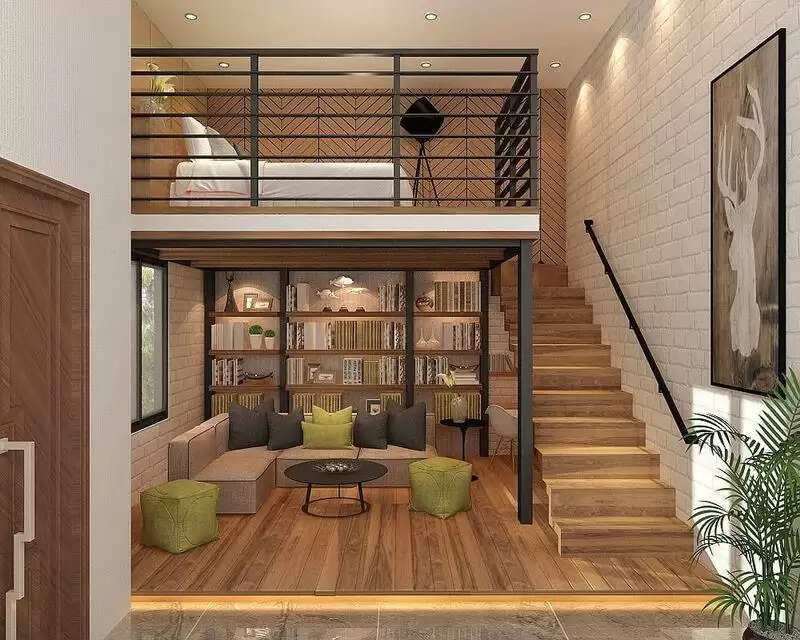
In time, the use of Mezzanines in commercial settings transitioned into residential designs; as urban living spaces began shrinking in size and becoming more compact, designers started thinking outside the box and using vertical space creatively to accomplish their goals. Thus, Mezzanines began to provide cost-efficient solutions for homeowners looking to create more livable space without physically expanding their properties. Today, homeowners love the flexibility and design opportunities Mezzanines offer and how they create unique ways of connecting various areas within their homes.
Mezzanine Floor Applications in Homes Today
Mezzanines create an extra floor of space where there was formerly relatively little or no horizontal extension in the home. For families that require an area in the same overall space but need different activity zones, the mezzanine provides a second lounge area above the primary lounge (living) space that connects to the main floor, creating visual interest as well as physically connecting the lower level to the upper level. This use of a mezzanine provides families with an additional place to spend time together, especially in housing that has limited/compact living environments (less than 1000 sq. ft.). Another application of a mezzanine is as a sleeping area above the lounge, allowing lounge space to remain open while maintaining privacy for the owner(s)/occupants. Young urban families often have very small bedrooms; the addition of a mezzanine bedroom above the lounge creates an efficient, intimate sleeping area while also connecting the sleeping area to the living area. Adding a mezzanine above the living room would allow urban families that have limited floorspace (smaller than 1000 sq. ft.) to comfortably create an efficient sleeping area above the lounge.
Reading nook – One of the many uses for a mezzanine is as an elevated reading nook that can be viewed from the main/bottom floor and also functions as a small library. By creating a nook above the main/living floor, you now have a space to retreat to while still feeling connected to the rest of your home.
The demand for home offices and study areas has increased dramatically since the onset of the global pandemic. People are working more than ever from their homes and have little room in their houses to create separate workspaces. Creating a small study or office area as a mezzanine, located above a transitional area (corridor, living room, etc.), provides privacy while taking up a small amount of space on the main floor. It creates a distinct area for study or work, with good light and airflow.
Advantages of Mezzanine Floors
Mezzanine floors offer an economical solution to maximizing your existing space without the need to remove any walls. Mezzanines are very quick to build as well. Prefabricated metal mezzanine modules allow for quick assembly, and they also create volume, resulting in dynamic interiors.
Guidelines for Designing a Mezzanine
Natural Ceiling Height – We recommend at least 17 feet (5.2 m) of clear vertical space above the mezzanine to provide adequate clearance for occupants to comfortably move about under the mezzanine. For each level above and below the mezzanine, provide no less than 7 feet (2.13 m) of clearance for occupants.
Mezzanine Slab Thickness – Typically, the thickness of a mezzanine slab varies from 3 to 6 inches (7.62–15 cm). The load-bearing capacity of a mezzanine slab (depending on the materials) may vary from 300 kg/m² to 1500 kg/m² (600 lb/ft² to 3000 lb/ft²).
Use of the Lower Space – Because a mezzanine reduces the height of the area beneath it, consider what type of function will be performed in the lower area. With a lower ceiling, it may make sense to locate seating, storage, or small work areas.
Access – The width of the stair should be no less than 2 feet (0.61 m) to provide safe access. Handrails are a critical component to provide stability and safety by preventing falls, especially for children and seniors.
Structural Stability – All mezzanines are engineered with different types of structural materials (i.e., concrete, steel, wood), and the load capacities will differ according to the materials used. A structural engineer must examine the existing structural system to determine if the existing structural system will adequately support the proposed mezzanine.
Lighting and Ventilation
Mezzanines can hinder the movement of natural light. Roof windows, skylights or large openings will allow natural light to flow into mezzanines and help create a bright and open environment. Thoughtful design of tongue-and-groove lighting will ensure that both the upper and lower levels of a mezzanine are evenly illuminated.
Mezzanine Safety Railings
A three-foot-high protective barrier of safety railings, such as wood, glass, or metal, will aid in maintaining the safety of users on the above mezzanine.
Mezzanine Furniture
In general, it is advisable to use lightweight, aesthetically pleasing, and easily removable furniture to keep spaces below mezzanines open. When no longer needed, these pieces can be easily removed and stored until required.
Conclusion
Mezzanine Design provides a unique opportunity to utilize vertical space in a home without significant structural changes. Therefore, installing a mezzanine in a home can add flexibility, functionality, and visual interest to today’s design trends. Whether using a mezzanine as an area for sleeping, working, reading, or relaxing, a mezzanine can redefine how we view the openness of a room, create a multi-functional space, and provide maximum use of available vertical space in homes with high ceilings and limited horizontal space options.
About the Author